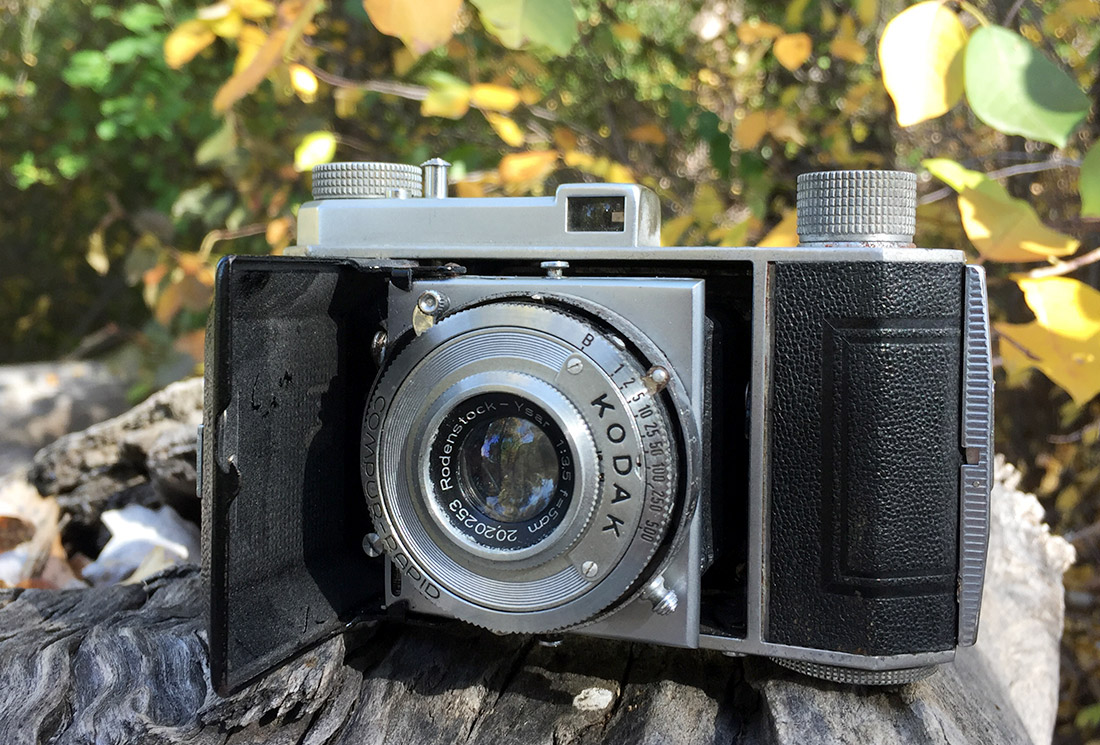
Kodak Retina I type 010: Post-war 35mm made in Germany

Kodak Retina I type 010 front
The Kodak Retina I type 010. (Daniel J. Schneider)

I found the Kodak Retina I at — you guessed it — a thrift store and initially struggled to identify it, but it’s a fun early folding 35mm camera.

Manufactured in Germany through many iterations since well before World War II, the Retina line took a breather during the war for obvious reasons. Kodak AG resumed production with the type 010 in late 1945. Closely resembling its pre-war predecessor, the type 148, the type 010 saw minor improvements after a year or two before being discontinued in 1949.

The primary differences between the early and late type 010 versions are the angle of the focus knob at infinity focus, and the shape of the focus knob itself. The earlier version has a squat, semi-conical knob and infinity focus is with the knob to the lower left corner of the lens board (from the perspective of one holding the camera ready for use). The later version has a knurled barrel-shaped knob and infinity focus at in the lower left corner. See these more-detailed images of the differences. Mine appears to be the early version.

Details

The Retina I type 010 was available with several different lens options and either a Compur (1/300) or Compur-Rapid (1/500) shutter. The lens and shutter are mounted on a focusing helicoid at the end of a short bellows that extends when the front cover is opened. Both shutter options offer speeds down to 1 second plus Bulb.

The Retina line included many of Kodak’s best offerings for several decades after the first Retina was release in 1934, and with it the 35mm film cassette we all know and love. Most of the line were made in Germany and many lenses produced by highly respected large-format lens maker Schneider-Kreuznach were available, as well as Kodak and Rodenstock lenses.
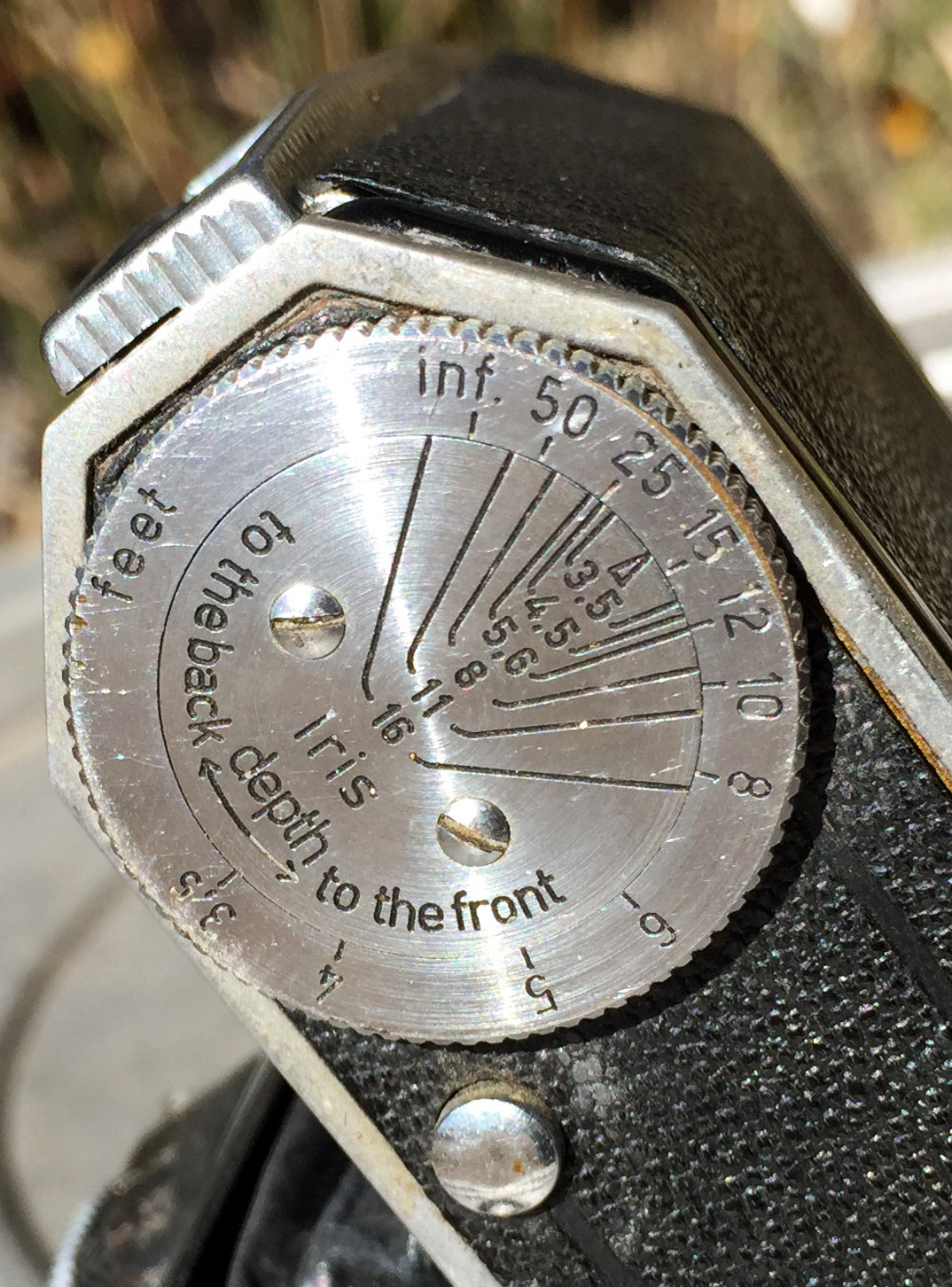
Depth-of-field calculator
The depth-of-field calculator on the bottom cover of the Retina I type 010. The door release button is partially visible at the bottom of the frame. (Daniel J. Schneider)

Focus is set by a distance scale, and a small calculator on the bottom cover helps determine depth-of-field. The viewfinder is a simple reverse-Galilean type in the center of the top cover. Next to it are two screws that can be used to mount an accessory shoe that was, inexplicably, omitted from this model despite being present on earlier Retina I models (later models featured an updated top cover that included a cold shoe).

The frame counter on the top cover must be reset by hand with each new roll, but counts up automatically when the film is advanced. The advance knob stops when a single frame has been advanced. The shutter release on the body is locked until the film has been advanced for double-exposure prevention, and is mechanically coupled to the shutter release lever on the shutter assembly.

The Retina uses an idler spool with geared ends, which engage the film’s sprocket holes, to operate the frame counter, release the shutter button and stop the advance after one frame. Film must therefore be loaded for any of these features to function, and without it, the advance knob spins freely and endlessly.

Retina 010 lens detail
Detail shot of shutter-lens assembly and controls. (Daniel J. Schneider)

The shutter must be set manually for each shot by means of a lever on the top left of the lens assembly. The shutter can be operated without film by manually pushing the release lever down on the top right of the lens. There is a separate standard release cable thread between the release button and the advance knob on the top cover.

Most models appear to have been equipped with a maximum aperture of f/3.5, and stops down to f/16. The aperture indicator is on the top edge of the shutter assembly and the setting is adjusted by means of a small lever on the underside of the shutter.

To rewind the film, slide the take-up spool release switch, on the back of the top cover below the advance knob, to the “R” position (the advance knob is engaged on the “A” setting). The rewind knob is on the left-hand end of the top cover and does not have a crank handle. It does slide up to disengage the cassette when rewinding is complete, however.

To load or unload film, open the back cover by opening the latch in the center of the left-hand end of the camera — a lever-type switch that pulls out and down with a fingernail.

Next to the depth-of-field calculator on the bottom cover is the rounded release button for the front cover. On the opposite end is a standard tripod thread. To close the front cover, depress the two small buttons on the top and bottom of the lens board. The “Kodak” badge on the front cover is actually a leg that flips out to allow the camera to stand vertically like many larger folding cameras.

The Kodak Retina I manual is a good read and chock full of Kodak’s marketing-laden mid-century terminology.

Retina I type 010 back
Kodak Retina I type 010 back view. Top cover controls from left to right: rewind knob, viewfinder, frame counter, shutter release, (partially visible) release cable thread, advance knob. Take-up spool release switch on back of top cover. (Daniel J. Schneider)

In Operation

Deceptively simple in appearance, the early Retinas were quite advanced mechanically. Unfortunately, this means there were a lot of moving pieces and therefore many possible points of failure. I have several and they all seem to have issues.

This one’s problems mostly relate to the shutter: the speeds are off (and get less and less accurate with each step slower on the scale), and the shutter release button coupling seems to have some issues that make it fail to actually release the shutter most of the time (which can be easily overcome by operating the lever directly).

Adding the scale focus to the mix I found testing the Retina type 010 rather tedious and only made it through one roll of film. I suspect surface rust, which is present all over the focusing helicoid’s distance scale, has invaded other parts and caused them to bind. There are faint marks around the edges of the lens elements which may be the beginnings of fungus growth, and considerable rust on the edge of the inside of the lens board. I suspect this camera came to Colorado from a much more humid environment.

Mime with chicken
A mime on Denver’s 16th Street Mall with her chicken. (Daniel J. Schneider)

Nevertheless, the early Retina models score very high for noticeability, constantly netting comments and questions with their fairly unique appearance. The are are also very solidly built and their size fits comfortable in the hand. Control layout is fairly intuitive and comfortable in operation, as well. All that said, the sharp corners and edges detract from what could otherwise be a very comfortable camera to hold.

I found the rewind knob tall enough and meaty enough to get a good grip on and rewind quickly and easily. The knurled surface on the rewind and advance knobs is textured well for a good grip without being sharp like on some cameras (I’m looking at you, FED-5c) — although it’s not clear if that’s by design or the result of age and use in the case of my unit.

The take-up spool release, while it appears to be conveniently placed near your right thumb at first glance, turns out to be fairly easy to hit by accident, or while sliding the camera in or out of a bag or pocket.

Lamp in Cherry Creek North
Lamp in Denver’s Cherry Creek North shopping district. (Daniel J. Schneider)

I found that with my type 010 setting the shutter before operating the film advance, for whatever reason, seemed to more often result in the coupled shutter release on the top cover functioning properly. I didn’t test it extensively enough to prove causation, but felt the correlation was worth mentioning.

The viewfinder offers no parallax correction of any kind, and it is very tiny. I found it somewhat dim, but that may be the result of age and accumulated dust and grime. Similar to an old Leica, too, it seems to show a bit more than what will be exposed on the film, so it’s worth giving your subjects from breathing room to be sure nothing’s cut off.

Loading and unloading are quite straightforward, matching the procedure for most late-20th century cameras. The latch to secure the back cover is secure but easy to operate.

The depth-of-field calculator on the bottom cover is an elegant and attractive solution, and easy to use. Rotate the outer ring to select the distance you’ve determined and read the marks indicated for the selected aperture (marked “iris”).

Window rail
A window railing in Denver’s Historic Country Club neighborhood. (Daniel J. Schneider)

While the bellows on mine is in excellent condition, the existence of a bellows is a big liability to the long-term reliability of this model, especially given the camera’s age.

As a stunning example of design straddling Machine Age and Art Deco styling, the Retina I succeeds fantastically. As a working camera, however, it falls short. I’ve used far worse, but the type 010 leaves rather a lot to be desired — mostly in terms of design advancements that would come within just a few years.

Older Retinas are quite collectible, though, and can be had relatively inexpensively. In good condition, I might like this just a little better.

Ketring Lake
Ketring Lake in Littleton, Colo. (Daniel J. Schneider)
Ketring Park path
A walking path in Ketring Park in Littleton, Colo. (Daniel J. Schneider)
Gate and home in Country Club
White picket fence gate and home in Denver’s Historic Country Club neighborhood. (Daniel J. Schneider)

Briggsdale, Colorado, and environs: A short update shot on Tri-X

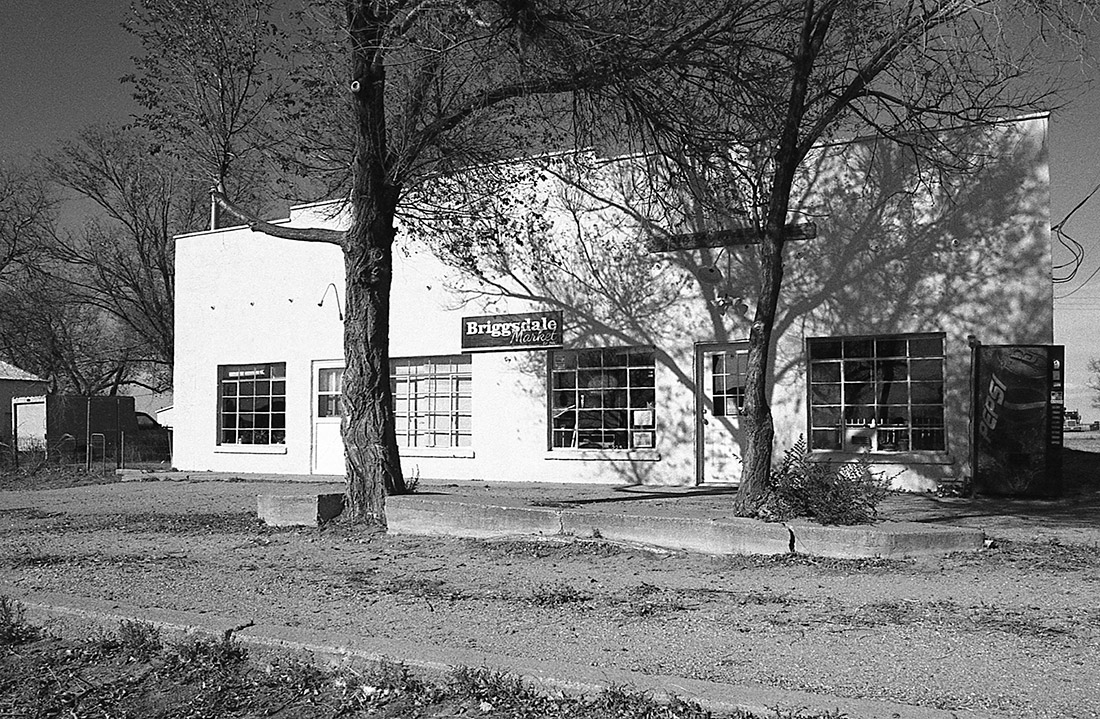
Briggsdale Market
Briggsdale Market sits on the two-block “business district” on the unpaved Main Street in Briggsdale, Colo. (Daniel J. Schneider)

It’s been entirely too long since I posted on my site. 2017 has been a year of upheaval and transition, several times interrupted by sub-upheavals and transition-ettes. I won’t go into tedious detail here, but those who know me are free to ask privately.

The highlights, though, involve moving myself and my cameras, and then a definite change of venue for the newsroom with uncertain timing, necessitating yet another move of myself and my stuff. That meant when I was about 80 percent done unpacking the darkroom and about 20 percent done setting it up everything went into an extended period of limbo. So that’s how it has been, unchanged, for about six months now. The end of limbo is, at least, in sight.

On the plus side, there’s a definite timetable in place now, so I’ll pack it all back up and move it again, and maybe next time I’ll make it further into the process so I can get back to improving my printmaking skills.

Suffice it to say that I’ve also been rather uninspired as a result of all that — leaving film undeveloped, scans unedited, and blog posts unwritten. I had a supply of posts ready to publish which I dipped into for a while to mask my absence, but it’s pretty much run out now.

Cat at Heritage House
A friendly cat was curious about our large format cameras and plethora of bags on the front lawn of the Briggsdale Heritage House museum. (Daniel J. Schneider)

Briggsdale

I met up with Andrew and Craig late last fall (or early last winter) some time — I’m not even sure when — and made a few pictures with my FM2 while we scouted Briggsdale, Colo. Don’t worry, there are more and better pictures from our trip on larger film, but they’ll have to wait.

These photos aren’t much, really, just some stuff I thought I might share at some point. Now, as I see about dipping my toes back into posting, seemed as good a time as any.

1939 International Harvester D-series
I think this is about a 1939 International Harvester D-series truck. (Daniel J. Schneider)

We started the day with breakfast and coffee at Gray’s Cafe in Ault, Colo., and then headed east to Briggsdale for the bulk of the day. We made it to New Raymer (Google seems to disbelieve in the “New” part, calling it just “Raymer” all over) about an hour before sunset, but in the scramble to make pictures there, the FM2 got left in the car.

The roads in Briggsdale are unpaved, and the town boasts a defunct repair shop or dealership that appears to have been partially restored and perhaps converted into one or more residences under a vintage-style painted sign that reads “Briggsdale Motor Co.,” a tiny convenience/grocery store (the Briggsdale Market), an abandoned post office and its more recent counterpart, a tiny history museum, a school, a Baptist church, a modern fire station, and a truck and tractor parts/salvage business.

The tiny Briggsdale Market was clearly once a gas station, but little remains of the fueling area. The pump islands have trees growing through them that appear to be 20-30 years old, and the concrete pad is among the only pavement in town.

As towns on Colorado’s eastern plains go, it’s among the tiniest I’ve visited that still has a clear and vibrant population (in this case, we saw at least half a dozen people), but is exceptionally small among the towns I’ve seen with remaining populations. Nevertheless, the place felt very friendly — less common than you might expect, at least in the experience of this city boy.

I was never happy with any of the pictures I took of the Briggsdale Motor Co. building, so I’ll have to return to try another angle. Perhaps in the late evening during the summer the light would be good. I’ll definitely keep New Raymer on my re-visit list, too.

1959 Ford F-500 4x4
A 1959 Ford F-500 4×4 at the truck and tractor salvage operation in Briggsdale, Colo. (Daniel J. Schneider)
Briggsdale Heritage House
The Briggsdale Heritage House is a tiny history museum on Main Street. (Daniel J. Schneider)
1939 International wheel
Detail of the front wheel of a 1939 International D-series, sitting off the road where it last ran sometime in the early 1980s. (Daniel J. Schneider)
1939 International sprayer
The 1939 International D-series parked off the highway near Briggsdale, Colo., was a sprayer truck for 40 or 50 years before it was parked. (Daniel J. Schneider)
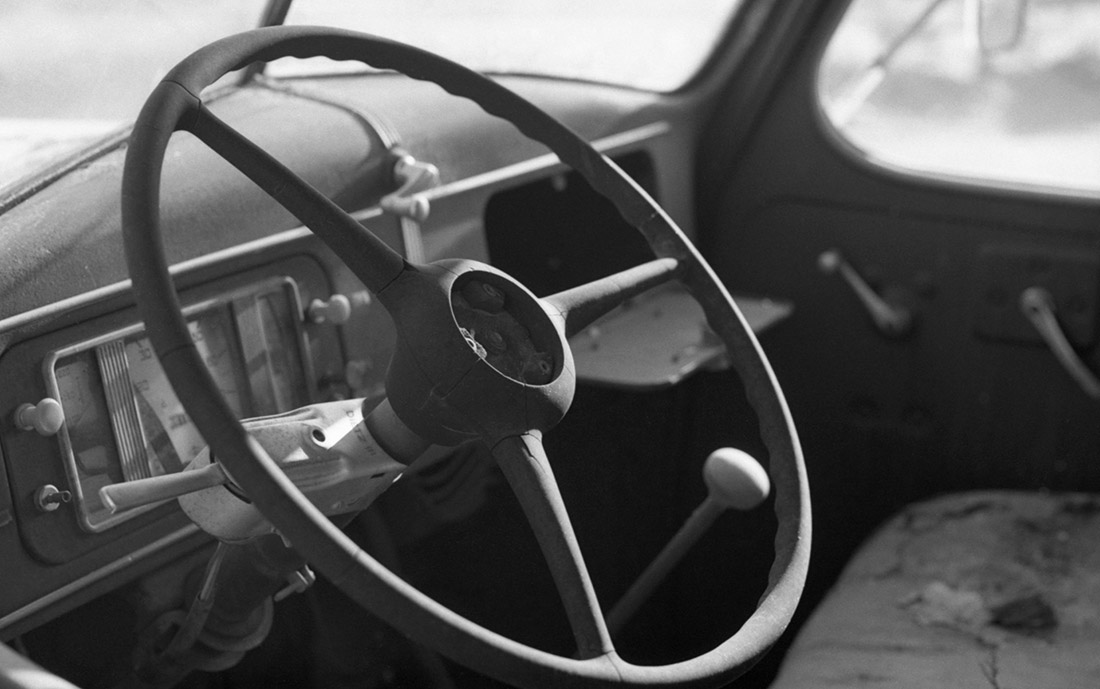
1939 International D-series interior
Interior detail of a 1939 International Harvester D-series that has been parked off the highway near Briggsdale, Colo., for around 35 years. (Daniel J. Schneider)

Nikkormat FT-2: Small changes, big improvement

Nikkormat FT-2 front
Nikkormat FT-2 front view. (Daniel J. Schneider)

About the same time I tested the Nikkormat FTn, a Nikkormat FT-2 dropped in my lap. While it’s very similar, it is set apart by several big improvements.

I’m going to start this review off with a shout-out to Glen Barber at The Denver Post. He brought the FT2 to work one day after finding it while cleaning out the attic or garage. It was his girlfriend’s, but she hadn’t used it in years and was happy to see it go somewhere it would be used. I’ve enjoyed trying it out — thank you, Glen’s girlfriend!

Next, I’m going to add a prominent link to my Nikkormat FTn review, because the FT-2 is so similar (read: nearly identical) outside of the updates. I’m going to focus here on the improvements rather than rehashing all that.

About those updates

For those who skipped reading the FTn review (I kind of knew you would), here’s a super-quick recap:

  • Fully mechanical vertical-travel metal focal-plane shutter with speeds from 1-to-1/1000 plus Bulb.
  • CdS-cell light meter with center-weighted metering and displays both on the top cover and in the viewfinder.
  • Non auto-indexing (Non-AI) lens compatibility; requires “Nikon Shuffle” to index lens for open-aperture metering.
  • Solid cast-aluminum alloy construction with chrome finish (or black enamel); weighty and comfortable, similar to Nikon F2.
  • Depth-of-field preview, self-timer, mirror lock-up and advance lever stand-off position to enable meter.
  • Non-interchangeable viewfinders, focusing screens, and film backs; no available motor drive unit.

You can also look at the manual for all the basics.

Nikkormat FT-2 lens mount
Nikkormat FT-2 lens mount and aperture-indexing mechanism. (Daniel J. Schneider)

The FT-2 features four important changes from the FTn: the batteries, a locking film speed selector, the focusing screen, and the flash/accessory attachment options.

The switch from the long-popular 1.35-volt PX625 mercury batteries to a single 1.5-volt silver-oxide SR44 battery is the “killer app” with the FT-2. If you have a choice between an FT-2 and an FT or FTn, it’s a no-brainer. Compatibility with modern batteries, cheap and readily available, is kind of a big deal.

Of course, that’s only for the light meter — a non-essential function, to my mind. Thanks to the mechanical shutter, you can use Sunny 16 rules, a handheld light meter or smartphone app (I use this one), or even just eyeball it. Which for me often goes something like:

“Well, it’s definitely f/11 and 1/1000 in the sun, but it’s probably three stops darker in the shade. Which I always think and always lets me down, so I should probably assume it’s 5 stops darker. That’s f/5.6 and 1/125. Let’s bump that to 1/60 just to be safe.”

Nikkormat FT-2 viewfinder
Nikkormat FT-2 viewfinder. (Daniel J. Schneider)

Three weeks later: “Damn, why are these so underexposed??”

Note to self: Use the stupid light meter app more — it was free and it works great.

Now that that’s out of the way, let’s talk about the other big difference: they added a hot shoe.

Not just a cold shoe — a hot shoe, with a standard center contact for use with the scads of electronic flashguns available at the time.

They retained only one of the two PC-sync sockets on the left shoulder of the camera, and offered no option to switch from X-sync to M-sync. Instead, the camera is X-synchronized for electronic flash at 1/125 and any slower speeds, and M-synchronized (for flash bulbs) at 1/250 and above. The new PC-sync socket is a threaded type, as well, expanding its compatibility.

It’s worth noting that when the FT-2 was introduced in 1975, the professional body was still the Nikon F2, which had only a 1/90 flash sync speed. The FT-2 offered a bit of an increase for those who needed it, and won some of its popularity for that fact alone.

Nikkormat FT-2 top
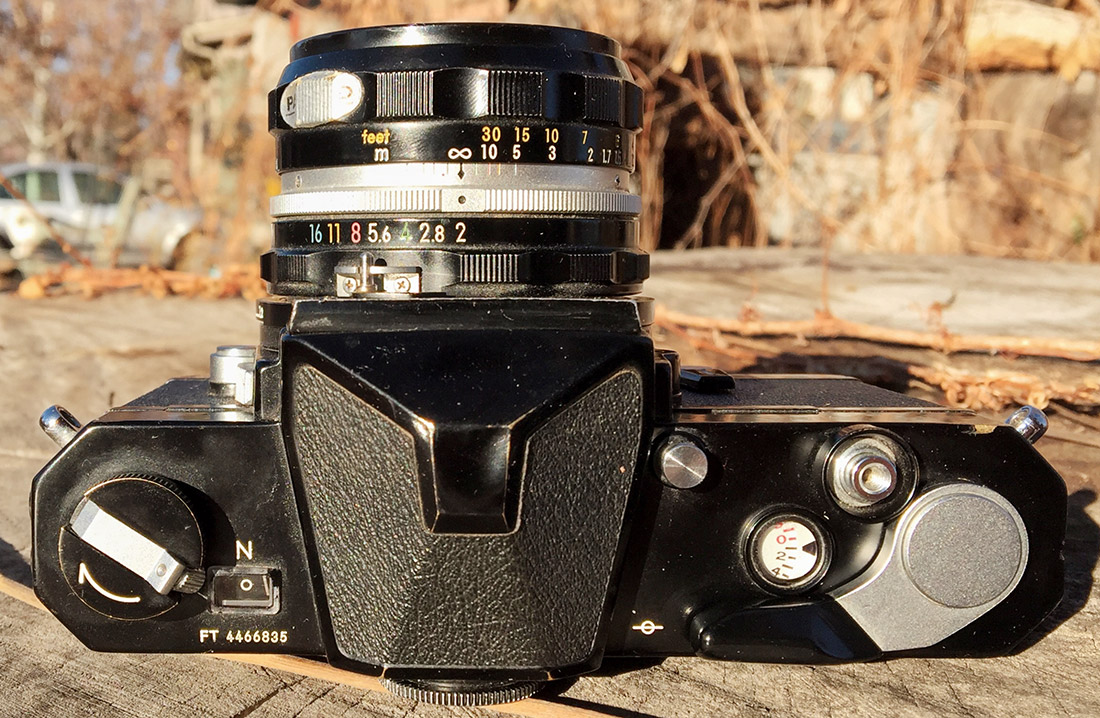
Nikkormat FT-2 top. From left: Rewind knob, top-cover meter display, updated pentaprism housing with hot shoe, depth-of-field preview button, frame counter, shutter release button, and film advance lever. (Daniel J. Schneider)

The film speed selector — a sliding tab on the underside of the shutter speed ring — was stiff and difficult to operate on the FTn, but making it much easier would risk making it too easy to knock out of position during normal use. The FT-2’s solution was to add a lock. The adjusting tab on the shutter speed ring has a secondary tab on its tip which, when pulled, unlocks the film speed selector. Unlocked, the selector tab is very easy to adjust.

The FT-2 was supplanted in 1977 by the FT-3, which added compatibility for the new auto-indexing lenses, but the FM also was release in 1977. The FT-3 was in production for less than a full year — reportedly the shortest production run of any Nikon SLR — as in 1978 the FE and EM were introduced. The Nikkormat EL and ELW had already been discontinued by mid-1977, and with the sudden halt in FT-3 production, the Nikkormat line passed into history.

Visually, though, the Nikkormat’s evolutionary design changes simply continued onto the FM/FM2n/FE/FG, etc. The big difference there was a serious reduction of size and weight, not unwelcome to photojournalists who often carried a camera on each shoulder and a backup or two in their bag.

Aspen in autumn
Aspen leaves in autumn colors, Wild Basin, Rocky Mountain National Park. (Daniel J. Schneider)

Nikon’s K-type focusing screen, a staple of the late-1970s and well into the 1990s, made its way to the FT-2, as well. The K-type has a large split-image focusing aid in the center, surrounded by a narrow microprism ring. A circle of matte Fresnel glass surrounds that, and plain ground glass composes the rest. The combination of focusing aids is excellent.

On the FT-2, several minor design improvements surfaced, as well. Rather than the sharp-edged design of the FTn, the rewind knob has a chamfered edge to soften its lines. It kept its knurled edge, though — a feature retained only on the F2 (and for just three more years) after the Nikkormat line’s demise.

The FT-2 also upgraded the design of the collar surrounding the shutter release button, making it a little more comfortable on the fingers, and a little more elegant in profile.

Lastly, the lens release button changed slightly, making it smaller in diameter but taller. It travels further into the body before unlocking the lens, though, and so retains similar security. It’s easier to know you’re operating the newer button, though, as on the FTn it travels only about 1 millimeter, making it hard to tell when it’s moved in far enough.

Aside from the altered shape of the pentaprism housing — to accommodate the hot shoe — the FTn and FT-2 are very difficult to distinguish from one another without a very close look.

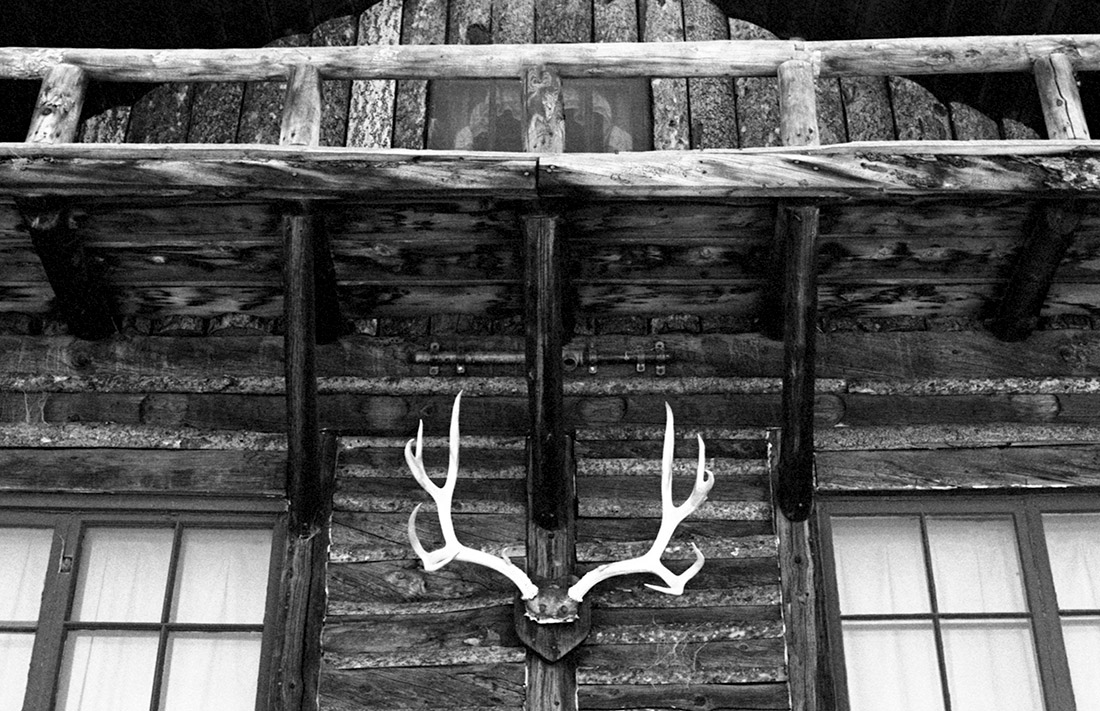
Allenspark Lodge
Antlers adorn the exterior of the historic Allenspark Lodge. The lodge was built by local high-schoolers under the tutelage of their shop teacher in the early 1930s. (Daniel J. Schneider)

Nikkormat heaven

Taking the FT-2 out for testing was truly great. It’s an excellent camera and feels very at home in my hands. The similarities to the F2 are many, and all to Nikon’s credit. The impression of quality and precision is quite visceral with a Nikkormat.

Truly, the distinction between a Nikon and its competitors in the 1970s and 80s was well-earned, and can be felt simply by picking one up (which I strongly encourage). That’s not to say the others weren’t good, and that there weren’t true standouts from other makers, but in my opinion, Nikon’s consistency of quality is without equal in the 35mm SLR market segment.

I could use this space to gush for six or eight more paragraphs about how great the FT-2 is, but you can read about all that in my FTn review, too. Functionally, there’s almost no difference.

If I had any real complaint about the FT-2, it would be only that the bayonet-type battery cover was retained. I still find it difficult to get it aligned securely and I don’t really trust it. It hasn’t failed me yet, but there’s an annoying compulsion to check on it frequently when carrying the camera around because of my mistrust (or paranoia).

Demolition in Cherry Creek
Demolition in Denver’s Cherry Creek North shopping district, which has been undergoing major changes as 1- and 2-story buildings are rapidly replaced by 6- and 8-story mixed-use construction. (Daniel J. Schneider)

The upgraded focusing screen is probably the functional change I noticed most from the FT. It feels very precise, as I’m used to with my FM2n (which also has a K-type screen). With the big f/1.4 lens, too, the viewfinder is brighter than that of the FT (although putting that lens on the FT reveals it to be quite bright, as well).

The frame counter, however, I’m thrilled they retained. The heavy red and black enamel marks on the bright, white enameled surface are easier to read in both low and extremely bright light. The fact that the marks are rather huge compared to the FT-2’s successors doesn’t hurt, either.

And that’s about it. The Nikkormat FT-2 is a brilliant buy. Given that you can get an FT-2 for (literally) just a few dollars more than an FTn, and more of the FT-2s seems to have the stellar 50mm f/1.4 lens equipped, this is really the way to go.

Here are some more test photos from my FT-2 adventure, all taken with the Nikkor 50mm f/1.4 using expired Kodak Ultra-Color 400 and fresh Kodak Tri-X 400:

Four Mile House
The name “Four Mile House” refers to the waystation’s location, four miles from the end of the Smokey Hill Trail in Denver. (Daniel J. Schneider)
Four Mile House historic park in Denver
Four Mile House historic park in Denver provides frontier life learning for schoolkids around the Metro area. (Daniel J. Schneider)
Allenspark
Aspen trees in Allenspark, Colo. (Daniel J. Schneider)
Copeland Falls
Copeland Falls in Rocky Mountain National Park. (Daniel J. Schneider)
Creek in Rocky Mountain National Park
A small creek in Rocky Mountain National Park near Copeland Falls. (Daniel J. Schneider)
Voorhies Memorial columns
Columns and shadows at Voorhies Memorial in Denver’s Civic Center Park. (Daniel J. Schneider)
Crabapple trees
Crabapple trees near the Voorhies Memorial in Denver’s Civic Center Park. (Daniel J. Schneider)
Allenspark cabin
Once part of the Allenspark Lodge property, the nearby cabins have been slowly sold off over the last 80 years. (Daniel J. Schneider)
Another Allenspark cabin
Another Allenspark cabin. (Daniel J. Schneider)
Ornamental grasses
Ornamental grasses off the central promenade in Denver’s Civic Center Park. (Daniel J. Schneider)
City and County Building flag
The American flag flaps in a stiff breeze in front of the Denver City and County Building. (Daniel J. Schneider)
Cherry Creek North doorway
A doorway in Denver’s Cherry Creek North shopping district. (Daniel J. Schneider)

Misrepresentation: The danger of misusing the camera’s selectivity

Inspiration Point Park
Inspiration Point Park in Denver features a hill covered in prairie grass and pine trees; a tiny sliver of wild Colorado in the heart of the city. Selective framing omits the surrounding houses and buildings, and the nearby Interstate highway. (Daniel J. Schneider)

To quote out of context is the essence of the photographer’s craft.

—John Szarkowski, “The Photographer’s Eye”

With every press of the shutter release photographers make choices about what they are presenting and how they will present it; what story they are telling and how it’s told.

As modernism overtook pictorialism in the early-to-middle 20th century, and the golden age of photojournalism began in the 1930s with the work of Henri Cartier-Bresson, Alfred Eisenstaedt, W. Eugene Smith and others, viewers began to see photographs as depictions of truth.

This was by design, of course, as many photographers of that era wanted their work to shine light on events that viewers could not experience first-hand. While manipulation was not new, or even necessarily difficult, strict adherence to newly-established standards of objectivity by many photojournalists of this era helped to position news photography as almost unquestionably credible.

As photography and photojournalism have matured, more philosophical examinations of the craft continue to question the version of reality presented by photographs. Even at the most basic level, some suggest, photographers’ choices in equipment and composition, and their very presence, can alter the truth of the reality their images ultimately show.

At one extreme, consider David Campbell’s “The problem with the dramatic staging of photojournalism,” in which he examines the production of conflict photographs. Describing the observer effect without naming it, Campbell writes, “The presence of a camera changes the dynamics of any situation regardless of the intentions of the photographer.”

At the other end of the spectrum, consider that it would take a spherical panorama to encompass everything present at any given point in space (and limited to the events of a slice of time far smaller than one second, usually), leaving our rectangular negatives woefully unprepared to encompass the whole truth of anything. We strive to frame our pictures in such a way as to capture the essence of the story we hope to tell, allowing nonessential parts of the scene to fall outside the frame — or even intentionally excluding portions that would distract from the intended message.

Since the photographer’s picture was not conceived but selected, his subject was never truly discrete, never wholly self-contained. The edges of his film demarcated what he thought most important, but the subject he had shot was something else; it had extended in four direction. If the photographer’s frame surrounded two figures, isolating them from the crowd in which they stood, it created a relationship between those figures that had not existed before.”

—John Szarkowski, “The Photographer’s Eye”

Photographers learned quickly to harness that power of inclusion and exclusion (a technique now commonly called selective framing) to improve their images, pose questions through unexpected juxtapositions, and, moreover, to highlight uncommonly seen aspects of life and our world that, unnoticed, might never have been considered by most viewers.

Ideally the photographer’s choices treat the subject fairly, illuminating the important aspects without omitting anything relevant. Great care must be taken to do this in a way we could call ‘honest.’ Exactly what makes a photograph dishonest remains a subject of considerable debate and the reasons are varied, but for the sake of this discussion let’s limit ourselves to considering whether the subject is treated fairly.

Photographs are a way of imprisoning reality, understood as recalcitrant, inaccessible; of making it stand still. Or they enlarge a reality that is felt to be shrunk, hollowed out, perishable, remote.

—Susan Sontag, “On Photography”

In early 2016 controversy brewed surrounding Steve McCurry, among the most decorated living documentary photographers in the world. Stemming primarily from accusations of image manipulation, McCurry later told TIME that he thinks of himself as a “visual storyteller,” and planned to limit his future use of Photoshop (link contains a high-level overview of the whole saga — more technical details here).

In the midst of this, McCurry also came under fire for his depiction of the eponymous country in his recent monograph, “India.” In a New York Times Magazine article, Teju Cole argued that the photographs, taken over nearly 40 years, unfairly show a carefully curated and idealized Indian past instead of the honestly portraying the country’s culture, people and industry as they exist.

While the conclusions drawn may not be the most obvious example, photographers work hard to idealize reality all the time. Closer to home, consider the “iconic” monuments and scenes near you and how they are presented.

Not far from me, southwest of Aspen, Colo., are three conjoined mountains of pink Pennsylvanian/Permian shale and silstone known as the Maroon Bells. The Maroon Formation began life as ancient sea beds nearly 300 million years ago which were compressed, and later uplifted. The rock layer is still nearly three miles thick and stands out from the Precambrian rocks the compose most of the central Rocky Mountains.

Northeast of the Bells, a narrow valley nestles between Sievers Mountain and Pyramid Peak. Maroon Creek runs through the valley and into Maroon Lake. From this vantage, around sunrise, near-iconic photographs can be made almost any day of the year. It is routinely (often grudgingly) listed among Colorado’s most-photographed places (No. 10 on this list).

Search Google for images of the famous scene and there’s hardly a bum in the lot. A lot of them are heavily processed, and I suspect many of the photographers stood shoulder-to-shoulder with dozens of others waiting for sunrise. But is this an honest depiction of the Bells? Enayetur Raheem’s images of crowds and suboptimal light likely represent the view of Maroon Bells most visitors see.

Too often photography is idealizing or typecasting its subject matter. This isn’t meant as an argument against selective framing — waiting for the shot to be just right is one of the most basic differences between a snapshot and a photograph. The purpose of a work guides how you frame it to exclude unnecessary details, or work with them. Portraits, for example, specifically exclude distractions — and often the rest of the world entirely — to elevate the subject.

A portrait like Rebecca Lily’s “Merritt at the Camp,” however, is very precise in what it keeps in and what it leaves out. Lily keeps a lot of very important environment without letting it become a distraction.

By curating what’s available to the viewer we can reinforce the story by helping to avoid distraction. But it’s a double-edged sword, allowing photographers to idealize something for a purpose — but also to do it frivolously.

If all your photographs are frivolous, they are unlikely to ever result in a meaningful body of work. Extreme curation of a scene is what makes someone like Annie Leibovitz what she is. A hand-off approach — working with the background as it is and focusing on the subject an the moment — fuels great street photography.

There’s no real conclusion here, because I hope I’ve just given you enough to think about to make up your own mind about how to tell stories well with honest photographs. There is no cut-and-dried formula for doing it right; each photographer has to figure out for themselves how they’re going to curate the world and the tales they’re weaving. As we do so, inevitably a little bit of ourselves creeps into our work, and the individuality of that viewpoint is what ultimately will (or won’t) set our work apart.

It is because of that very freedom that, however, we must remember: intentional or not, we make a statement with what we choose to include and what we choose to exclude, and that our very presence can impact the nature and verity of our subjects, especially if they are people.

The photographer was thought to be an acute but non-interfering observer—a scribe, not a poet. But as people quickly discovered that nobody takes the same picture of the same thing, the supposition that cameras furnish an impersonal, objective image yielded to the fact that photographs are evidence not only of what’s there but of what an individual sees, not just a record but an evaluation of the world.

—Susan Sontag, “On Photography”

Rocky Mountain National Park: Driving the Old Fall River Road

Switchback
Switchback. Ilford Pan F Plus. (Daniel J. Schneider)

Built in large part by prisoners with hand tools between 1913 and 1917, the Fall River Road in Rocky Mountain National Park offers stunning views that harken back to the earliest days of auto touring in the U.S.

Work stopped in 1917 with the entry of the United States into World War I, and a contractor took over in 1918. The road opened to motor vehicle traffic in 1920, allowing passage from Estes Park to Grand Lake and the Kawuneeche Valley.

West Horseshoe Park
West Horseshoe Park. Ilford Pan F Plus. (Daniel J. Schneider

Trail Ridge Road was constructed in the early 1930s, utilizing the western half of the Fall River Road from Fall River Pass and a new eastern approach along Trail Ridge. The new approach allowed for fewer switchbacks and a gentler grade, while achieving greater altitude and (some would say) more impressive views.

The Old Road, as it is sometimes referred to by park staff, follows Fall River and switchbacks up the face of Mount Chapin, the southern tip of the Mummy Range, from West Horseshoe Park. Some time prior to a 1968 reconstruction effort, the road was paved to the Endovalley picnic area.

Fall River Valley from West Horseshoe Park
Fall River Valley from West Horseshoe Park. Fujifilm Velvia 50 (Exp. 1998). (Daniel J. Schneider)

Once over Fall River Pass, the Alpine Visitor Center is at the junction with Trail Ridge Road, leading back down Trail Ridge to West Horseshoe Park, or west to the foot of the Never Summer Range and, eventually, Lake Granby.

Initially called the “Fall River Highway,” the road was built by the State of Colorado under an agreement with the U.S. federal government to maintain it in a time when Grand and Larimer counties were hoping to attract tourists to the “Switzerland of the Rockies.”

Fall River Valley
Fall River Valley. Kodak Portra 160NC (Exp. 2006). (Daniel J. Schneider)

Period newspaper stories reported the round trip from Denver, through Estes Park and Grand Lake, and back over Berthoud Pass, took just two or three days, and called it “one of the greatest circle trips in the world — a trip which, it is predicted, will make Denver more famous the world over.”

Fall River Road is open seasonally depending on weather — often opening in late July and remaining passable for just a few months before snows close the road, which is not plowed. After the road closes to vehicles, it remains open to bikes and hikers until November, and provides a trail for snowshoeing and cross-country skiing through winter.

Golden-Mantled Ground Squirrel
Golden-Mantled Ground Squirrel. Kodak Portra 160NC (Exp. 2006). (Daniel J. Schneider)

Currently, vehicular travel is limited to one direction: up. Trailers and large RVs are prohibited due to the needle-tight curves on some switchbacks. On my trip I saw full-size pickup trucks require three-point turns on several switchbacks, though the Jeep handled them without even hitting the limits of its turn radius.

Rocky Mountain National Park covers 76 square miles of prime Colorado Rocky Mountain real estate, and was established in 1915 by President Woodrow Wilson. The Beaver Meadows Visitor Center, which houses the park’s headquarters, was designed by the Frank Lloyd Wright School of Architecture at Taliesin West.

Fall River
Fall River. Kodak Portra 160NC (Exp. 2006). (Daniel J. Schneider)

The park is largely surrounded by National Forest and Wilderness land, and is a UNESCO World Biosphere Reserve.

Fall River Road map excerpt
The route of Old Fall River Road and Trail Ridge Road described in this post is highlighted in orange. Excerpted from Rocky Mountain National Park official park map.

To reach the Fall River Road, approach the park from Estes Park via the Fall River Entrance Station and follow the signs for the Alluvial Fan. Lawn Lake Dam, built in 1903 by Loveland farmers to increase the surface height of the existing natural lake, failed spectacularly in 1982, killing three park visitors, causing $31 million in flood damage to the town of Estes Park, and depositing the Alluvial Fan.

Alluvial Fan
Alluvial Fan. Ilford Pan F Plus. (Daniel J. Schneider)

Hikers can walk far up the Alluvial Fan to see Horseshoe Falls, where the Roaring River, exiting Lawn Lake, drops nearly 500 feet in a series of rapids and short drops from its hanging valley to join the Fall River below.

Beyond the Alluvial Fan and the Endovalley picnic area, the pavement ends and single-direction traffic begins on the 8-to-10-foot-wide gravel road. There are no guard rails and grades are mostly 8 or 10 percent, though they can be as steep as 15 percent at switchback turns.

Fall River Cirque
Fall River Valley near cirque. Ilford Pan F Plus. (Daniel J. Schneider)

Along the way there are plenty of turnoffs and wide spots to pull over and take in the surroundings. There are several short hiking trails, as well, including one that offers close-up viewing of one of the many short falls on Fall River.

Chasm Falls bursts through a narrow slit in the rock floor of the valley and drops about 25 feet to a narrow, deep fall pool. The hike is really more of a walk, and takes just a few minutes to descend a hundred or so loosely connected steps. Beware: parking is at a premium in the pull-off, and the rock steps can be extremely slippery if wet.

Fall River
Fall River (downstream of Chasm Falls). Kodak Portra 160NC (Exp. 2006). (Daniel J. Schneider)

Climbing further up the road, the switchbacks become tighter and more frequent as you approach the origin of Fall River — Fall River Cirque, a bowl nearly a mile across and over 1,000 feet deep from the top of Trail Ridge to the southwest. Herds of elk can frequently be seen in the cirque, drinking from the alpine pools where snowmelt gathers — year round, for the snowpack on the north face of Trail Ridge rarely melts completely — to feed the river.

Just before the summit of the pass, two short trails lead up Chapin Creek and higher on the slope of Mount Chapin, and offer further views of the Mummy Range and Trail Ridge.

Tree growing from boulder
Tree growing from boulder. Kodak Portra 160NC (Exp. 2006). (Daniel J. Schneider)

From the top of Fall River Pass, you can see down the Fall River Valley all the way to Estes Park and beyond. The Alpine Visitor Center, just off the pass, sits at 11,796 feet above sea level — and several hundred feet above treeline, too.

From the Visitor Center, join Trail Ridge road and head east back to Estes Park or west to Grand Lake — either direction offers further views.

I chose to head back to Estes Park and stopped at every turnoff I saw — at least half a dozen. Views across Forest Canyon stunningly showcase the mountains that make up this stretch of the Continental Divide, including Terra Tomah Mountain and Stones Peak.

Forest Canyon Overlook
Forest Canyon Overlook. Agfa Optima 200 (Exp. 2002). (Daniel J. Schneider)

Heading this direction you’ll cross Milner and Iceberg passes, and traverse the highest point on the road — at 12,183 feet — near the Lava Cliffs. Don’t miss the Rock Cut and Forest Canyon turnoffs on either side of Sundance Mountain, offering views of the Gorge Lakes, nestled between Mounts Ida and Julien in an especially large cirque.

Further down the road makes a large arc around Hidden Valley before turning back on itself at Many Parks Curve. Passing Beaver Ponds, it then reaches Deer Ridge Junction, where drivers can return to West Horseshoe Park to the north or head south through Moraine Park and Beaver Meadows.

Rock Stack
Rock Stack on Fall River. Kodak Portra 160NC (Exp. 2006). (Daniel J. Schneider)

These photographs were all made in a one-day drive on Oct. 24, 2016, a few days before the road closed for the season — later than usual due to the long and temperate autumn in Colorado this year. I used my Pentax 6×7 and a variety of lenses. It was the first serious outing for the 300mm f/4 lens, and it performed admirably.

I also used a variety of films, including an expired roll of Fuji Velvia that turned out a touch dark, but not too badly. The roll of Agfa Optima 200 I tried was extremely disappointing, as I exposed it at EI50 and still found my results at least a full stop underexposed. Rolls of fresh Ilford Pan F Plus and well-stored Kodak Portra 160NC fared far better.

Most of the park’s geologic beauty was carved by glaciers over millions of years. A 1916 geologic guide republished by the National Parks Service takes readers on a tour beginning in Estes Park.

Ground Squirrel at Endovalley picnic area
Ground Squirrel at Endovalley picnic area. Fujifilm Velvia 50 (Exp. 1998). (Daniel J. Schneider)

Additional resources:

Note: I found, after making the image at the top of this post, a very similar one from the Historic American Engineering Record at the Library of Congress.

Couple at base of Alluvial Fan
Couple at base of Alluvial Fan. Fujifilm Velvia 50 (Exp. 1998). (Daniel J. Schneider)

Nikkormat FTn: A competent companion for the consumer

Nikkormat FTn front view
Nikkormat FTn front view. (Daniel J. Scneider)

As the Nikon F dominated the professional market, the company brought the same level of quality to the advanced amateur with Nikkormats. The second generation of these was the FTn.

Made from 1967 through early 1975, the FTn featured several improvements over its short-lived predecessor, the FT, which was made from 1965 to 1967. A meter-less version, the FS, was launched at the same time as the FT and remained in production until 1971.

Chevrolet 6400 grill
Side-angle detail of a 1956-58 Chevrolet 6400 2-ton truck in the Baker neighborhood. (Daniel J. Schneider)

It was the FTn that introduced the “Nikon Shuffle” for lens aperture indexing. On the FT the process was similar, but more complicated (described roughly on Wikipedia). For the FT: set the lens aperture to f/5.6, slip it into the mount with the indexing fork aligned over the pin, twist the lens until it locks, and immediately run the aperture ring to the smallest, and then the largest, openings. The technique would survive more than a decade and through a number of models before AI (“Auto-Indexing”) lenses were introduced in 1977.

The other noteworthy improvement over the FT was a change to the metering method, from an all-over averaging to the center-weighted pattern that remains among the most popular metering modes even in today’s top digital cameras. Compared to the F and F2, the FTn lacks interchangeable viewfinders, accessory motor drive compatibility, and the split-image aid on the focusing screen.

The Nikkormat offered a considerable savings over the F2 — 30-50 percent depending on options — and yet sacrificed very little. The construction is similarly high-quality and the Nikkormat is compatibile with all the same Nikkor lenses.

Visually, the Nikkormat line established most of the design cues that would continue through the shift to AI lenses as the advanced amateur models moved from Nikkormat to the Nikon name. The design heritage can be seen on the FM2n, EM, FG and other models well into the 21st century.

Specifications

Built around a fully-mechanical, vertical-travel, metal focal-plane shutter, the Nikkormat FTn keeps up easily with competitors such as the Pentax Spotmatic and Canon’s FT series.

Nikkormat FTn front controls
Nikkormat FTn front controls and aperture coupling. (Daniel J. Schneider)

Center-weighted, open-aperture metering with a CdS cell (the only thing requiring the camera’s mercury battery) took 60 percent of its reading from the viewfinder’s 12mm center circle, and the remaining 40 percent from the rest of the viewfinder area. A match needle is visible in a window on the left-hand side of the top cover, as well as in the viewfinder.

A 4mm-diameter microprism focusing aid is visible in the center of the viewfinder screen, and the meter’s 12mm center sensing area is marked with a ring farther out. At the bottom of the viewfinder the selected shutter speed is visible in white (clear) with the next-higher and next-lower speeds seen to either side with a yellow tint. The viewfinder offers 92-percent coverage of the image area.

The shutter speed selector is a ring at the front of the lens mount, just behind the lens’s aperture ring. A complex mechanism, the shutter speed ring can be rotated by a knob at the lower left, and displays the speed on the top right of the ring. Speeds from 1/1000 down to 1 second, plus Bulb, are available.

Nikkormat FTn lens index mark
When the lens is indexed properly, the red mark on the Nikkormat FTn will indicate the maximum aperture. This is an f/2.0 lens. (Daniel J. Schneider)

On the top left of the ring, the maximum aperture of the lens is indicated by a small red dot along a scale marked from f/5.6 to f/1.2. After the Nikon Shuffle is performed, the dot should match the marked maximum aperture on the lens, or else the lens will have to be removed and re-mounted.

The bottom of the shutter speed selector ring features the film speed setting, which is also coupled to the light meter. Speed selections from ASA 12 to ASA 1600 are available and are selected by sliding a small silver tab one way or the other along the scale until the desired speed is visible in the center of the tab.

On the left side of the lens mount are the lens release button and the mirror-up switch, and to the left is a 10-second-maximum infinitely-variable self-timer lever.

On the bottom cover a standard tripod socket is flanked by the battery cover and take-up spool release button. The rewind knob on the left-hand end of the top cover features a flip-out crank handle, but is also knurled around the edge and can be turned without opening the crank and can be pulled up to disengage the film cassette. On the edge of the top cover below the rewind knob are two PC sync sockets for M- and X-sync.

Nikkormat FTn viewfinder
Nikkormat FTn viewfinder, showing the light meter match-needle and shutter speed display. (Daniel J. Schneider)

Just to the right of the viewfinder housing is a depth-of-field preview button. Farther out the frame counter is a white disc with red and black markings under a slight magnifying lens. In front of the frame counter is the shutter release button (with a release cable thread) and to the right is the film advance lever.

The single-stroke advance lever pulls out about 25 degrees to turn the meter on and moves in a 135-degree arc to advance one frame, automatically incrementing the frame counter (up) each time. The frame counter resets automatically when the film door is opened. The back cover latch is on the bottom left corner of the camera and pulls down to release the latch. Film loading is straightforward.

Visually the earlier FTn was indistinguishable from the FT aside from the “N” marking in front of the top-cover light meter display. Some updates in 1971-72 added an updated film advance lever with a plastic tip, the plastic-tipped self-timer lever and an improved focusing screen with a split-image focusing aid in the center, surrounded by a microprism ring.

Nikkormat FTn top view
A top view of Nikkormat FTn showing (from left) the rewind knob, top-cover light meter display, pentaprism housing, depth-of-field preview button, frame counder, shutter release and film advance. (Daniel J. Schneider)

The Nikkormat Experience

Using the FTn is hard to remark upon critically, to be completely honest. Aside from the limitations imposed by the lack of interchangeable viewfinders or motor drive attachments, it’s very similar in operation to the Nikon F2 or Pentax K1000. The major difference, functionally, is the shutter speed selector ring, which took some getting-used-to.

In the hand, the Nikkormat feels like a slightly less-polished version of the Nikon F2 in almost every way. The size and shape are very similar, and the weight is nearly as impressive. As if to proof the adage about Nikons’ solid builds, my FTn looks very much like it was actually used to pound in a nail or two.

Courtyard
Courtyard at an apartment building in Denver’s Baker neighborhood. (Daniel J. Schneider)

When it came to me (and I probably overpaid for it) I didn’t think the dent in the top of the pentaprism housing would be any trouble, but it turns out that the deformation of the housing extended down the front face enough to alter the alignment of the aperture coupling apparatus.

I had to remove the nameplate from the front in order to clean, lubricate and adjust (read: tap gently with a block and hammer) the complex mechanism whose binding-up problem made it impossible to remove the lens, or adjust the aperture to anything other than f/16 or f/11. After my “adjustments,” the aperture indexing works correctly and apertures larger than f/11 can be used again, and lenses can be put on and taken off again without issue.

Puddle reflection
Reflections in a puddle after a rainstorm in downtown Denver. (Daniel J. Schneider)

The shutter release is well-positioned and operates smoothly and responsively. Not mentioned above, I find it interesting to note that while the shutter release button is drilled and threaded for a standard cable release in the button itself, an externally threaded collar around the bases of the button can also accept a Leica nipple. The FT and FTn were reportedly favored as second or back-up bodies by photojournalists using the F2, so accommodating the nipple makes sense so photographers don’t have to carry two releases in their bag.

The depth-of-field preview button is very conveniently located and easy to operate, as is the mirror lockup button. The self-timer lever’s look, feel and placement all appear identical to the F2, though the lever actually is slightly longer on the F2. Changing the film speed can be very, very difficult. The slider is tough to move and hard to get a grip on, as well.

The film advance lever is standard Nikon fare — a relatively short stroke and that comfortable stand-off position you can hook your thumb behind. Popping it out to turn on the light meter is easy and convenient, and being able to turn off the meter positively is excellent for conserving battery power.

The viewfinder is big and, while not as bright at the F2 or FM2n, fairly bright overall. The light meter display is easily visible, well-marked and easy to use. The shutter speed selection display is useful, though to my eye it would make more sense to highlight in yellow the selected speed, rather than using the yellow to indicate the speeds to either side.

Paramount Theater marquee
Paramount Theater marquee in Denver. (Daniel J. Schneider)

The shutter speed selector ring, similar to Olympus OM-System cameras, is abnormal enough to throw you off for a bit if you don’t use this camera regularly, but not hard to get the hang of. It does get a little difficult to move back once you’ve slowed down to 1 second or Bulb, as the tab your finger moves to turn the ring moves over the edge of the lens mount, making it more difficult to get a finger behind it.

One minor complaint is the battery door. While the tripod mount and take-up spool release button on the bottom cover work simply enough, the battery cap uses a bayonet-type fitting rather than a thread. It most be rotated a quarter of a turn to move the cap’s tabs to match gaps in the fitting, and it can be rotated either way with ease, meaning it has to be aligned just right to stay snugly in place, and that sweet spot can be overshot a little too easily for my taste.

Fortunately, the battery is only needed for the light meter and the shutter works at any speed without a battery. Sources disagree on whether the FTn has a bridge circuit and can therefore return accurate meetings even with the increased voltage of a silver-oxide battery. Mine doesn’t seem to work at all.

All in all, a worthy competitor for the K1000 and other all-manual workhorse 35mm SLRs of the 1970s, and a solid addition to the Nikon line.

Here are some more test images:

Scooters for hire
Scooter rental has been ramping up in Denver with groups like this parked in several spots near the Colorado Convention Center. (Daniel J. Schneider)
Side yard
Curious cat and wicker furniture in a Denver side yard. (Daniel J. Schneider)
Arsenal burn
Blackened ground from a brush fire at the Rocky Mountain Arsenal National Wildlife Refuge. (Daniel J. Schneider)
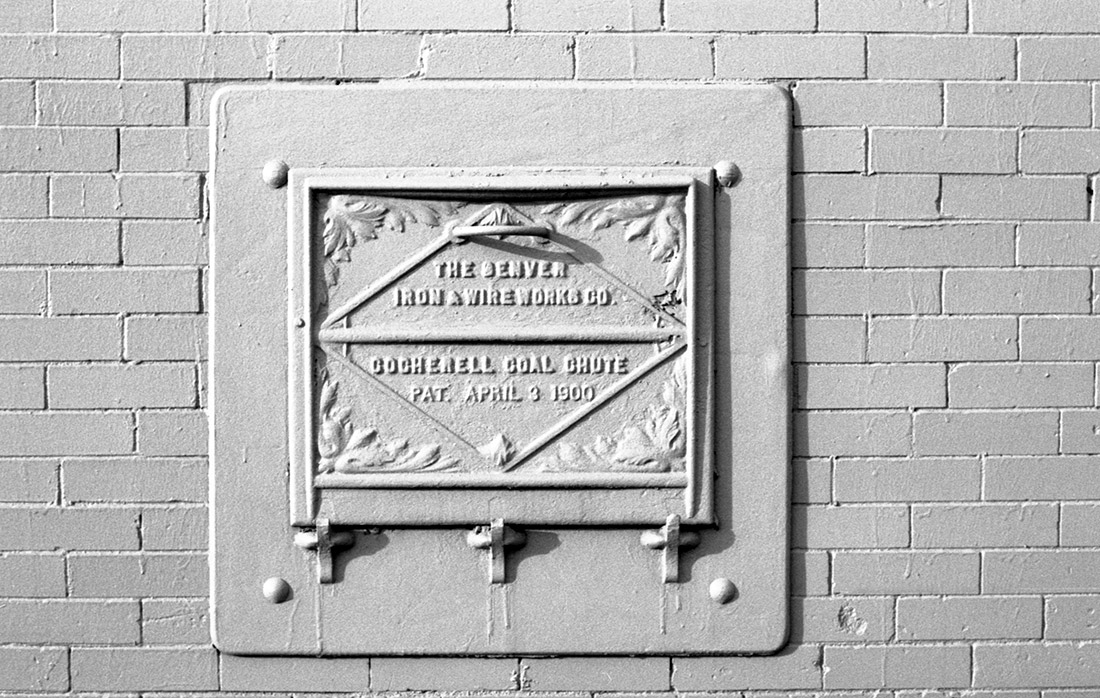
Coal chute
Cocherell coal chute door on a historic Denver home. (Daniel J. Schneider)
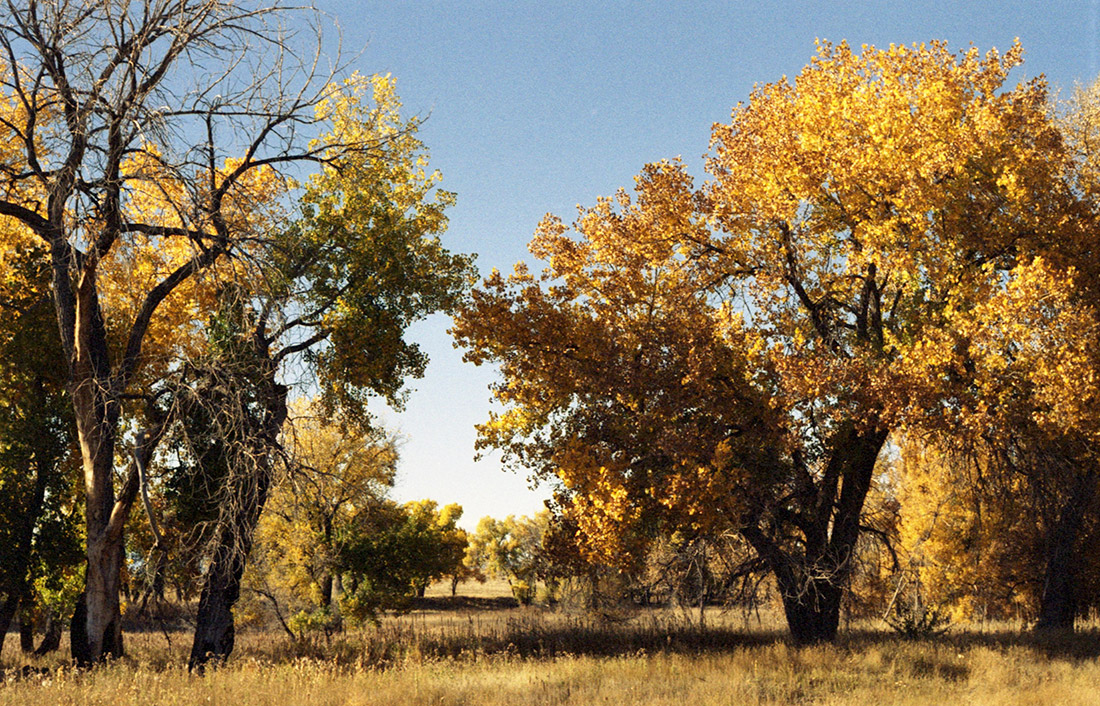
Fall color at the Arsenal
Fall color at Rocky Mountain Arsenal. Daniel J. Schneider)
1963-67 Ford C-600 truck front
1963-67 Ford C-600 truck front. (Daniel J. Schneider)
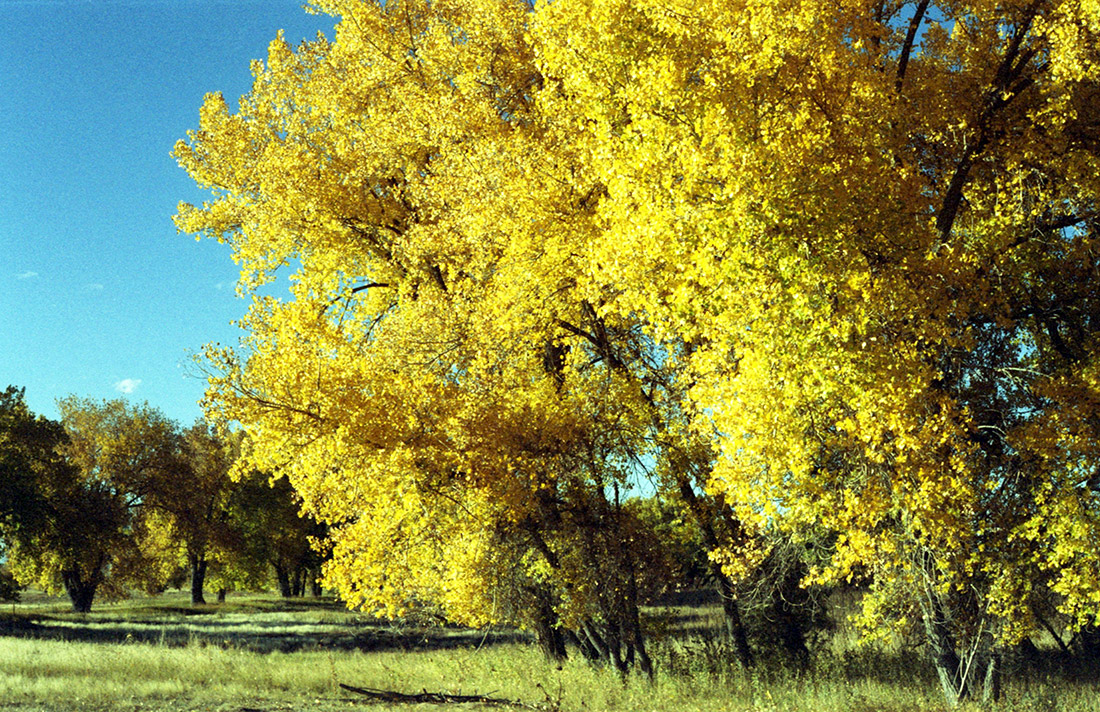
Fall color at on the plains
Fall color on the plains. Daniel J. Schneider)
Wish You Were Here
Wish You Were Here, the name of an exhibit of neon sign art at a Denver gallery. (Daniel J. Schneider)
Fall color at on the plains
More fall color on the plains. (Daniel J. Schneider)
Aztlan Theatre
Denver’s Aztlan Theatre — formerly the Santa Fe — was built in 1920. (Daniel J. Schneider)
16th Street alley
A familiar alley off the 16th Street Mall in downtown Denver. (Daniel J. Schneider)
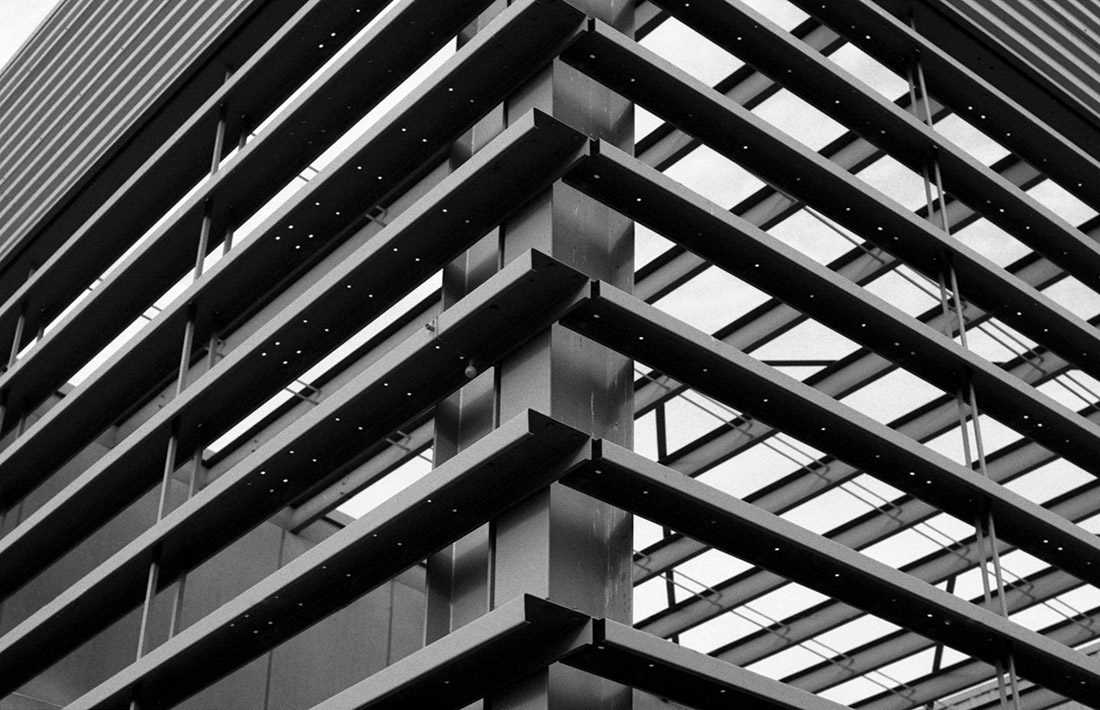
Architectural detail
Architectural detail. (Daniel J. Schneider)

File photos: My first #FP4Party with the Yashica-Mat

Second day of shooting
Second day of shooting in historic Georgetown, Colo. (Daniel J. Schneider)

Another brainchild of the inventive and fleet-footed EMULSIVE, #FP4Party is a monthly group effort to showcase the possibilities with Ilford’s ASA 125 film.

The idea is to shoot as much or as little Ilford FP4 Plus as you like, in whatever format you prefer, during the first full week of the month. You get week two for developing, scanning, printing, etc., and share the results in the third week of the month. Submissions are gathered, finalists nominated, and then there’s a vote for a monthly winner.

Devil's Food
Devil’s Food offers stellar Southern-inspired breakfast and lunch in Denver. (Daniel J. Schneider)

The November winner — a well-deserving shot from Maite Pons — was named in early December.

As yet I haven’t really participated. I made all these pictures during the shoot week in early September, and while I had hoped to share some in time, it was not to be. It always takes me forever to process my film, unfortunately. Or perhaps fortunately.

Bicycle at Wish
A bicycle in front of the Wish boutique in Denver’s Old South Gaylord district. (Daniel J. Schneider)

I say that because initially I wasn’t particularly thrilled with any of these photographs, but with time to reflect on them I’ve found a few I like more than I thought.

I must admit, though, following along loosely with the @FP4Party Twitter account and the finalists’ galleries has been fun and enlightening.

Microscope
An antique microscope seen through the window of an Old South Gaylord shop in Denver. (Daniel J. Schneider)

When Kodak discontinued Plus-X in late 2011, I was devastated. I’d only just settled on it as my favorite panchromatic film and I was ill-prepared to find a replacement.

Since the speed of Plus-X (also ASA 125) was one of the reasons I liked it so much — I mostly work outdoors in bright sun, and I don’t always have fast shutter speeds available to me — I tried other slow films instead. For some, like Delta and TMax 100, it wasn’t my first experience. Others were new to me.

Washington Park alley
An alley in Denver’s Washington Park neighborhood. (Daniel J. Schneider)

I hadn’t tried FP4 Plus previously, so I bought some. In those tests I found it unpleasantly grainy. It was (at least) five years ago, though, and I’ve refined my development technique considerably in that time.

These results show much more even grain and, while it’s a little more pronounced than the grain of Pan F Plus, it is not less pleasing to me. In fact, I’m very happy with what I see from FP4 Plus today.

Birdhouse
A pressed steel birdhouse hangs from a low branch in the Washington Park neighborhood. (Daniel J. Schneider)

I had two opportunities to take my Yashica-Mat out that week and I had five rolls of FP4 Plus in my film case. The first pictures in this series are from the first of those two days, when I dropped by South Gaylord Street in Denver — a one-block stretch of historic buildings in an old residential neighborhood, isolated from any other commercial or industrial properties, crammed with small and unique businesses.

From there I walked to, and around, Washington Park, both in search of pictures, and in service of my recent goals regarding my weight and general level of fitness (seeking less and more, respectively). A gravel walking/jogging path encircles the park and forms a 2-mile loop that makes for an excellent afternoon stroll.

Washington Park
City Ditch, once used for irrigation, runs through Washington Park in Denver. (Daniel J. Schneider)

The second half of this set is from a drive later in the week that included a strenuous hike to an abandoned mine high in the Rocky Mountains, and a relaxing stop in historic Georgetown, Colo.

Georgetown was once among the richest mining towns in Colorado, and it shows in both the number and opulence of the homes and buildings dating as far back as just after the Civil War. Now it’s primarily a tourist trap, albeit one absolutely drenched in history, and a stopping-off point for anyone headed over Guanella Pass.

Wash Park cyclist
A cyclist speeds around the ring road at Washington Park in Denver. (Daniel J. Schneider)

I was fairly exhausted and didn’t stay long in Georgetown, but I was glad for the opportunity to walk on gentler grades in town for a little while before completing my drive back to Denver.

All in all, I’m pleased with my results. And I don’t mind that they’re late — #FP4Party provided the inspiration, but my focus is on making good pictures and improving my craft rather than participating in events and contests, and I’m happy to watch those aspects from a distance.

All the pictures in this post are presented in the order in which they were taken, meaning you’ve only seen those from Denver so far. Here are the ones from Georgetown:

Georgetown Colorado
Historic building in Georgetown, Colo. (Daniel J. Schneider)
Strousse Park
An old mine cart on a short track segment in Strousse Park, Georgetown, Colo. (Daniel J. Schneider)
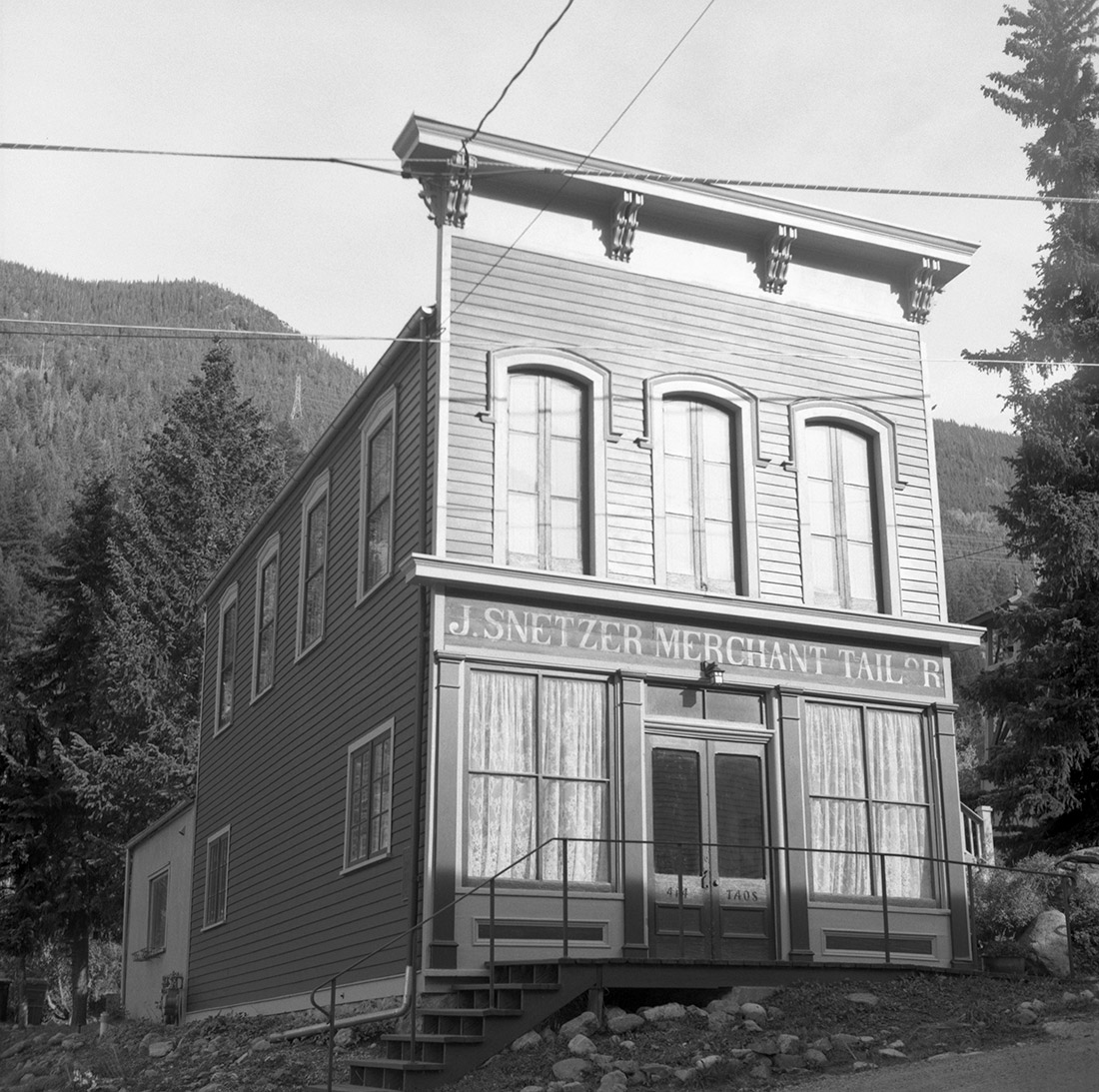
J Snetzer Merchant Tailor
J Snetzer Merchant Tailor, Georgetown, Colo. (Daniel J. Schneider)
Historic porch
The porch of one of Georgetown, Colo.’s many historic buildings. This house was built in 1885. (Daniel J. Schneider)
Georgetown Valley Candy Company
Georgetown Valley Candy Company building detail. (Daniel J. Schneider)
Georgetown Museum
Georgetown Museum. (Daniel J. Schneider)
Detail of Built in 1867
Detail of a Georgetown building identified only by the large painted sign, “Built in 1867.” (Daniel J. Schneider)
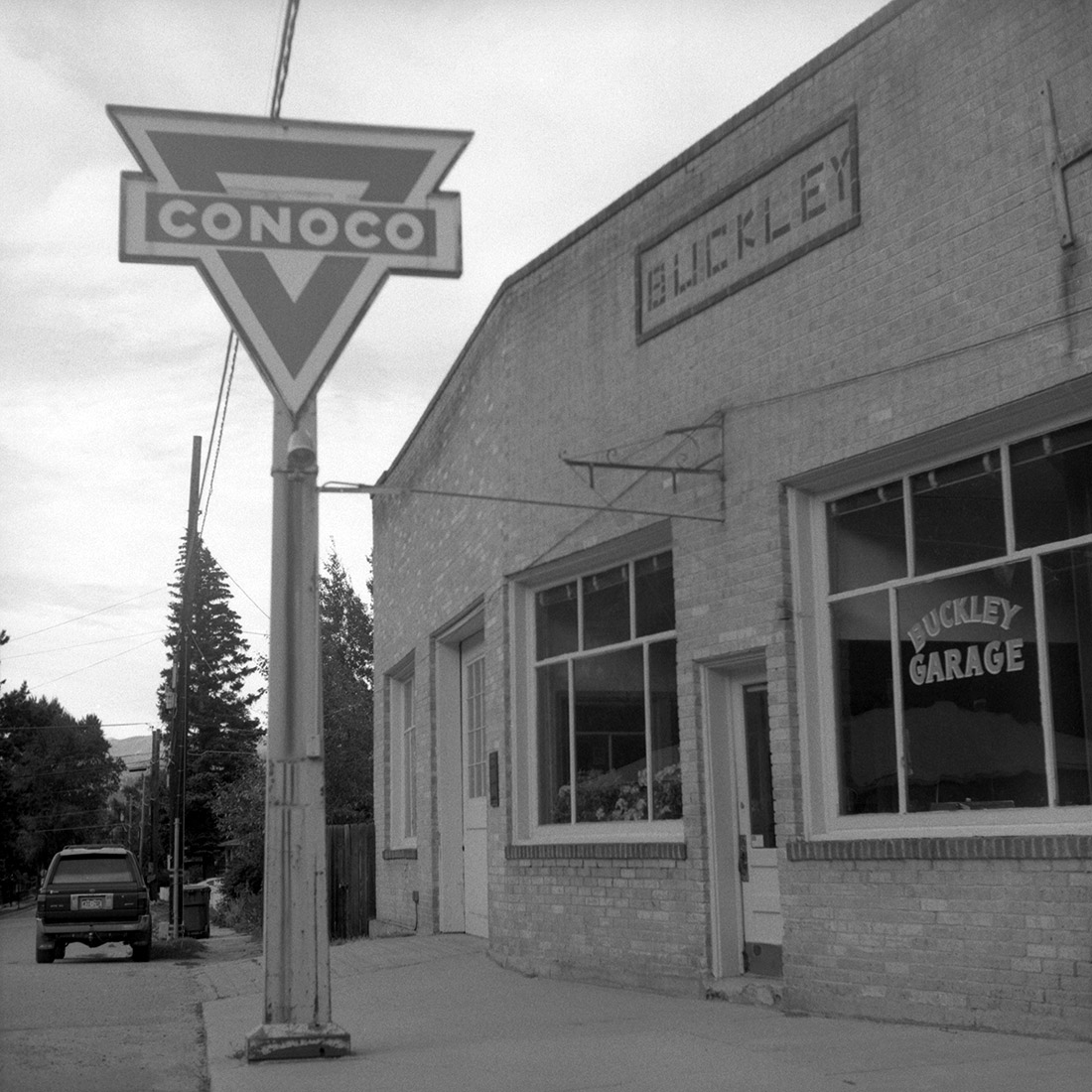
Buckley Garage
The Buckley Garage in Georgetown was built as a Dodge-Plymouth dealership and converted to a service station in the 1950s. The pumps were removed to make way for a widened road in the early 1990s. Leroy Buckley, who operated the station for decades, died in 2003. A plaque on the building commemorates Buckley’s 73 years as both a fixture in and pillar of the Georgetown community. (Daniel J. Schneider)

Sears Tower 55A: It is very small

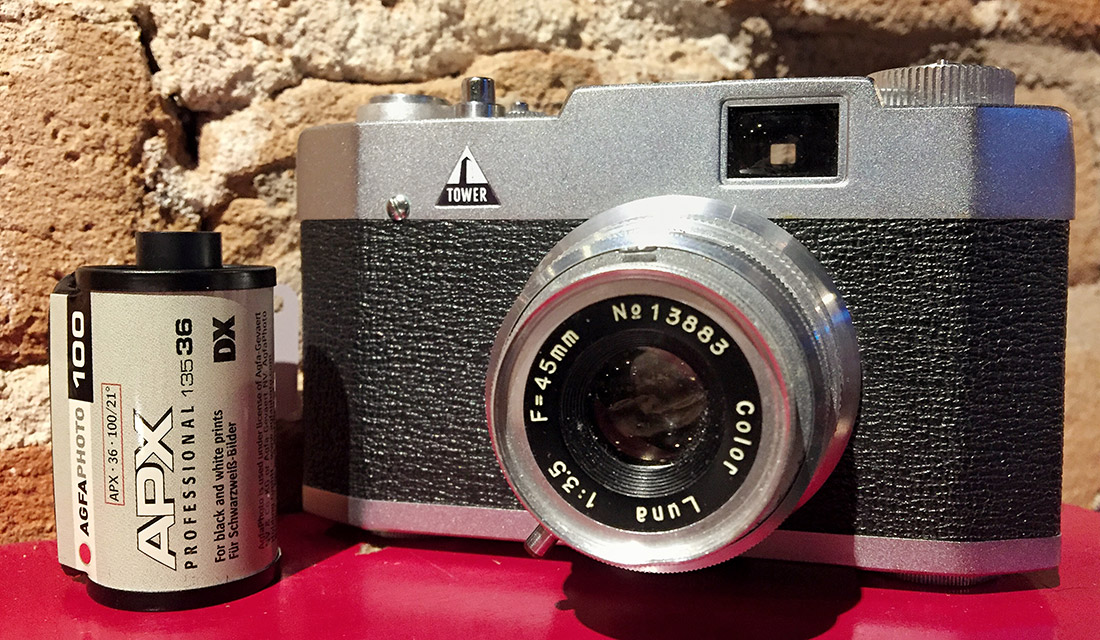
Sears Tower 55A front
The Sears Tower 55A. (Daniel J. Schneider)

The Sears Tower 55A is a very, very small 35mm viewfinder camera with a few manual controls and little else.

It came to me from Jef Price along with the Lomochrome Purple as part of the first Half-Baked Half Frame Tour, which I also discussed in my post about the Olympus Pen.

It’s an exceedingly simple little camera, and sadly this particular one is not in great shape, so this is a short review.

Sears Tower 55A top
The top cover of the Sears Tower 55A. (Daniel J. Schneider)

Features

There is very little information to go on about this camera, but it appears to be a Yamato Kōki Kōgyō model, either the Atlas 35 or Rippa, rebadged by Sears under their Tower label for the American market.

Relatively little is known about this particular Yamato company, as the name was used by many camera makers in the mid-20th century. This manufacturer reportedly disappeared not long after these were made.

Appearing from 1959 to 1961, the Tower 55 was available in two variants, possibly concurrently: the 55A and the 55B. Mine is, I believe, a 55A. Apparently, the 55B was marked on the top cover, while mine has no such markings. Its only text markings are the word “Tower” on the top cover, and, on the bottom, a stylized “Y” over the word “Japan.”

It’s a basic viewfinder camera with a “Color Luna” lens at 45mm and with a maximum aperture of f/3.5. The shutter has four speeds: 1/300, 1/100, 1/50, and 1/25, as well as Bulb mode.

Shutter speed and aperture are selected with rings on the lens barrel, and the front of the lens assembly rotates for scale focusing from just under 3 feet to infinity.

Baker home
A blurred Baker neighborhood home from a neighboring parking lot. Motion blur is all-too-common with this poor Tower. (Daniel J. Schneider)

Also on the lens barrel is a PC socket for attaching a flash, and similar models claim to sync at any speed, which is often the case with any leaf shutter such as this. There is a red dot between f/8 and f/11 on the aperture ring which I suspect may be related to the use of flash, but I can find nothing to confirm or deny that.

The top cover contains the film advance lever, shutter release button (threaded for a standard release cable), frame counter and its adjuster knob, take-up spool release button, a cold accessory shoe, and the rewind knob with a simple film reminder on top.

While the frame counter counts up automatically when the advance lever is operated, it does not reset to zero automatically when you change film. The adjuster turns the frame counter only one direction, counting up to 35 and then back to start (“S”). The take-up spool release button is in the center of the frame counter adjust knob.

The rewind knob pulls up about 3/16-inch to make rewinding a little easier. The film reminder dial on top of the rewind know is a simple disc printed with red speeds (ASA 10, 32 and 100, for color film), black speeds (ASA 25 through 1000, for black-and-white film), and an “Empty” space. It can be rotated with a fingernail to align with an index mark on the edge.

To load and unload the camera, a knob in the center of the bottom cover rotates to unlock, and the entire back-and-bottom assembly pulls off. The film leader slides under a steel spring clip, similar to loading a Barnack Leica, and is actually rather difficult to get right. Also on the bottom cover is a standard 1/4×20 threaded tripod socket.

Baker alley
Another victim of the inconsistent shutter, this view of a rain-soaked alleyway in Baker wound up being something like a half-second exposure. (Daniel J. Schneider)

Trying it out

I was eager to try out the Tower 55A, but found the shutter inconsistent. At first I thought it was just sticky lubrication from age, and I exercised it extensively in the hope that it would get with the program. It started off extremely slow at any speed, and when it seemed to be much more accurate I finally put film in the camera.

The focus ring was also stuck when I got it, but a little lighter fluid and determination got it moving smoothly, if a little stiffly, again.

Sadly, I think there is more wrong with the shutter; probably something mechanical. The camera does have several dents in the top cover that indicate some rough handling — probably on its journey to me through the mail, which was a long one involving being lost and returned more than once, I think. As soon as it had film in it, it began to misbehave.

What I discovered during the roll, and confirmed afterwards, is that the shutter doesn’t actually have any speed selections except instant and bulb. I’m sure it’s meant to operate at the marked speeds, but functionally they are all the same now. All equally inaccurate. At any speed setting, it might operate at 1/300, or 1/4 second. It often takes its sweet time closing. And other times it’s so fast its opening can barely be detected, in spite of being set to 1/25 second.

16th Street Mall
Planters and a man playing piano on Denver’s 16th Street Mall. (Daniel J. Schneider)

Well, whatever. That’s not the point of these reviews.

As usual, I found scale focusing an annoyance. The aperture and shutter speed rings operate easily, though, and the shutter release button offers enough tension to avoid accidental exposures without being difficult to operate. The advance lever and rewind knob both move fluidly and with relative ease. The advance snaps back with a speedy and satisfying snap.

The size is excellent. It’s very, very small. Really, exceptionally small, even among small cameras. What’s more, its cousins and competitors represent a whole class of cameras this diminutive, including a number from Halina and Kalimar.

16th Street Mall piano
Another fairly sharp view of the 16th Street Mall in downtown Denver. (Daniel J. Schneider)

The lens does protrude quite a ways from the front, however, and I found that it makes the camera rather poorly balanced. It stands on the feet on the bottom cover, but only just. Even on a solid, level surface, the vibrations of the earth seem to cause it to mysteriously wobble. It’s almost spooky.

Due to the shutter issues described above, you can see a lot of motion blur in my test photos. A couple worked out pretty well, and in them you can see the lens is really not half bad, with just a little loss of sharpness and minor chromatic aberration at the corners.

It could be a fun little camera if someone wanted to fix the shutter. If that’s you, let me know — I’m happy to pay this one forward for the cost of shipping now that I’ve tried it out.

Baker Volvo
A vintage Volvo parked in front of a historic home in Denver’s Baker neighborhood after a brief rain. (Daniel J. Schneider)
Red Rocks
Denver’s Red Rocks Park, looking down across the upper parking lot toward Creation Rock. The amphitheater is on the other side of Creation Rock, nestled between it and Ship Rock farther to the south. (Daniel J. Schneider)

Pen-O-Ramas: First attempts and an introduction to the Olympus Pen

Olympus Pen front view
The tiny Olympus Pen. This first version was made in early 1960. The gaffer tape is holding a cracked piece on the viewfinder I plan to glue carefully when the film is out of the camera. 35mm film cassette for size comparison. (Daniel J. Schneider)

I got the idea to test my Olympus Pen camera by making pseudo-panoramic multi-frame images when the first Half Baked Half Frame Tour kicked off. I have some test results to share, now, and have learned a bit in the process of making them.

A Pen-O-Rama is an attempt to align several frames in such a way that they form a semi-panoramic diptych or triptych (or whatever four or five frames in a row is). As the name implies, a Pen-O-Rama is done with an Olympus Pen-series camera, though any half-frame camera should work.

Panoramas aren’t new, and some of the earliest efforts were the result of multiple images stitched together. In the case of a Pen-O-Rama, the final image is the result of printing an uncut piece of film in which neighboring images are carefully taken so as to give the illusion of a single image broken up by the interstices of unexposed negative between the frames.

I haven’t a clue where the term Pen-O-Rama originated, although this post from 2009 on Rangefinderforum.com showcases some really nice examples. I’d be willing to bet it’s older than that, though.

The EMULSIVE tour was going to be my chance to try this out, but the tour was short. Unfortunately, the Olympus Pen-D, which was flying around the world between eight photographers, each taking eight shots on the unknown ASA 400 film inside, jammed pretty badly on its way to me in Colorado. I believe I’m on the roster for the second tour, which I hope will be starting soon, so I’ll get another chance to join in the collaborative fun. Maybe the lessons I’ve learned here will help me to better contribute, too.

Civic Center Park
Civic Center Park in Denver as seen from the Voorhies Memorial arcade, looking south toward the Denver Public Library and Denver Art Museum. (Daniel J. Schneider)

I used my own Olympus Pen, which is much older than the one jetting around for the EMULSIVE tour, for these shots. I figured it would be a practice run, but I didn’t get around to finishing the roll for quite awhile.

Mine is the first version of the original Olympus Pen. The serial number indicates it was probably made in March or April of 1960; the second version began production in May of 1960 when manufacturing was moved from a third party factory to Olympus’ own facilities.

The first Pens have a 28mm f/3.5 lens that is so flat that it makes most pancakes lenses look more like Belgian waffles. It’s so flat. Really, really flat. It protrudes from the body only 7 or 8 millimeters. As you can see in the photo at the top of this story, the entire Pen is just about as small as it can be and still have room for 35mm film.

A Pen-O-Rama must be taken by moving the camera from left to right, or moving the camera in that relative direction if you rotate it to go vertical. Since the image size is half of a normal 24×36 millimeter frame, the frames wind up being portrait orientation: taller than they are wide. If you’re a mostly landscape photographer like me, you’ll be rotating the camera a lot for single shots. The Pen-O-Rama technique is actually a bit easier since each component photo is a vertical slice of the whole scene; you’re just scooting over one frame width to the right each time.

Denver Pavilions sign
The Denver Pavilions sign on a bright, cloudy day. You can really see the overlap problem in this example. (Daniel J. Schneider)

The first thing I learned is that you have to choose a subject that is more-or-less directly level with the camera. The lens on the Olympus Pen is wide enough that the distortion from aiming up or down can wreck the effect in some cases. You can cope with some of the distortion by moving the camera laterally to the right as well as rotating it. In the Pen-O-Rama above, the curve of the sign combines with its being above and to the right of the camera position to create such a mismatch of angles between neighboring frames as to be distracting.

I also learned that the viewfinder is much too conservative on my Pen. The images it makes are actually much larger than what the brightline guides indicate. I think the photographed area more closely match the entire visible area of the viewfinder, in fact, based on the amount of overlap I see in these examples. Note the location(s) of the parks maintenance truck in the first example above, and the two columns that appear four times.

I was very careful when framing to align the right edge of the brightline frame with a memorable landmark or something I could use as a guide, and then align that same thing with the left edge of the brightline for the subsequent image. As you can see, though, there is a lot of duplicated area in the right edge of one image, and the left edge of the next image to the right.

City vertical
This Pen-O-Rama really exaggerates the height of downtown Denver, which I really like. (Daniel J. Schneider)

The idea, of course, is to get the edges so close to lining up that the combination of the several images looked almost like a single image with a segmented frame placed over it. The illusion, sadly, is shattered somewhat in these examples. Notwithstanding that I need to refine my technique a little, I quite like the effect it produces.

One thing I didn’t try — it hadn’t occurred to me until I saw the results of the vertical image above — is adjusting exposure slightly between frames in order to better balance an overall scene with extreme differences in lighting.

A final observation: Scanning these was difficult because the un-exposed portions of the film are so black (clear on the negatives, that is) that the scanner software attempts to adjust the exposure with that as the black point. The results is a low-contrast mess that appears grossly overexposed, in spite of the fact that my film looks to have been slightly underexposed on the whole.

These examples were all made on a 36-exposure roll of Ilford Delta 100, meaning I got 72 half-frame images which was, frankly, too many. I advise you to stick to 24-exposure rolls, or make up some 15- or 20-exposure rolls if you’re bulk-loading your own cassettes. I’m not a huge fan of the tabular grain of Delta films in the first place, and my HC-110 habit seems to exacerbate it further, so these came out rather too grainy for my taste.

I have the Pen loaded with a roll of color negative film now and will be applying these lessons. I’ll have more to share in the future, as well as a more thorough review of the early Olympus Pen itself.

B-52 bomber
A Boeing B-52 Stratofortress bomber outside Denver’s Wings Over the Rockies museum. The plane was previously assigned to Lowry Air Force base and flew live nuclear missions during the Cold War before serving as a ground-only training plane after Lowry’s runways were closed permanently. (Daniel J. Schneider)

Why you should share your photographs with others

Genoa, Colorado
Genoa, Colorado, August 2015. (Daniel J. Schneider)

By now it’s clear I like to share things, such as my writing and photographs on this blog, and I believe you should share, too.

As regular readers likely know, I was featured in the “Why I shoot film” series on EMULSIVE about a year ago, shortly after my friends Craig and Andrew were featured, too. Since seeing Craig’s post, I’ve followed them all.

Recently, Kristen Smith (@KristenwaCamera) was finally featured herself. I’ve followed Kristen on Twitter a long time, and her passion for photography borders on obsession. Her energy and curiosity inspire me regularly.

As I read the interview, though, I realized I was hardly familiar with her work at all. She’s digging her way into exploring the concept of “home” and making strides toward learning to convey its meaning to her viewers. I see much potential there, and find myself wishing she shared more.

And then I start to realize there are a lot of people in the film community whose work I wish I knew more of. To Kristen and all those others, this one’s for you. And it’s for me a bit, too — in spite of how many photos I post on this site (around 2,000 now), most do not represent my best work.

Genoa filling station
Genoa filling station, August 2015. (Daniel J. Schneider)

Communication Breakdown

Let us suppose first that photography is a form of art, or that it can be. This was not thought to be the case at first, but by the early 20th century the Pictorialism movement was enjoying some success convincing the art world that photography was worthy. To me, whether a given photograph is art requires some understanding of the photographer’s intent when making it, because photographs can be simple record-keeping or a variety of other things. But much of it is, at least in part, art.

Next, let us suppose that art is a form of communication. While this supposition, too, remains the subject of debate, there is a lot of support for the idea that art can be communication. Once again, it is not necessarily so, and a certain amount of intent may affect whether a specific photograph is communicative and how effectively it communicates. I would argue that all successful art conveys a message, though it may not always be the exact message intended by the creator.

At its most basic, communication consists of a sender, a receiver, and a message. There are also means of encoding and decoding, and the medium, in the middle. In the case of photography, we must suppose that the sender is the photographer; the means of encoding are silver salts and paper or plastic (and a lot of chemistry); the medium is the photograph itself in whatever form it takes, be it digital or a physical print; the means of decoding is the receiver’s vision and all the experiences and cultural influences that affect them; and the receiver is the viewer.

The message, of course, is dependent upon the photographer’s intent. What is the photographer trying to convey with an image? A photojournalist might be attempting to share an event of historical or local significance in a form that transmits more information to their viewer than written words can. An artist may be attempting to convey a specific emotion, or another concept of cultural or philosophical importance.

When the photographer successfully creates a photograph that conveys their intended message to the intended viewer, photography succeeds perfectly as a form of communication. When there is a breakdown in any of the six parts of communication, it fails. This could mean the photographer was unsuccessful in committing their intended message to film or to print; that the receiver was unable to discern the message due to cultural or linguistic differences; that the photograph was unsuccessfully transmitted via the medium; that the message wasn’t received at all; or that something else interfered.

The most complete form of breakdown is when the message is not received at all, let alone decoded correctly. And if the message is never sent, a breakdown is assured.

Washington County, Colorado
Washington County, Colorado, July 2015. (Daniel J. Schneider)

The Unseen Photograph

A photograph made is a message encoded, and the photographer, its sender. A photograph unseen, though, is a message unsent.

Lately I’ve been pondering why I photograph. I imagine if you asked a dozen photographers that, you’d get a dozen different answers.

My answer is that I hope, one day, to assemble a body of work that tells a story (or several stories) about The West, both as it exists today and as we now see the afterimages of how it existed twenty years earlier, or fifty years earlier, or even more. But if I compose that story and never share it with anyone, is it even a story? With a nod to Schrödinger’s cat, I propose that a collection of ideas or photographs, the scenes that make up a story, is only a story in potentia until it is told, at which point it either succeeds or fails to convey the creator’s meaning; until that time, whether it is a story or not is indeterminate.

A photograph unseen by others is similarly indeterminate. It may succeed or fail, but as long as it remains hidden it is only art in potentia.

A famous recent example of this kind of indeterminacy is the story of Vivian Maier, a photographer-nanny in New York and Chicago who died without ever sharing her massive body of work. She became an internet darling and her work stormed the art world after her death, when others bought up Maier’s negatives and began to share them and look into her past. It remains unclear what her intent was when she made the hundreds of thousands of photographs she left behind, and probably will remain a mystery forever. And while some of her photographs appear to be very good, it’s not really possible to discover whether they succeed or fail without some inkling of her intent.

This is not to say that there is no value in creating art for oneself, but there are two ways to think of that.

Some work is created with others in mind, and if it doesn’t align with the interests or message of the creator, it can become tedious. Doing work for hire that doesn’t interest you is a recipe for burnout. You’ll never do your best work, and might even find yourself doing distasteful work, when you’re working only with someone else in mind. It may not even be possible to be true to your own vision, and going against your own interests is anathema to what drives most creatives. The importance of creating work for yourself — work that aligns with your own instincts and with which you are satisfied — is well documented. But creating work for others, whether it satisfies you or not, still is sending a message to whatever audience it’s created for.

Still other work created for oneself is that in which you, the creator, are both the sender and the recipient. Making art that satisfies you and you alone can be the most rewarding kind. And I’m definitely not saying that there is no value in creating something for yourself alone, with no intention of sharing it. Often, even when the final goal is a piece meant to be shared, there may be tests and experiments, and tangential works, that we create for our own education or enjoyment along the way.

But in the end, it’s my contention that we can’t fully achieve our potential without sharing our work. We can see, after all, through only our own eyes. To truly understand our own work, we must learn to see it through the eyes of others.

Arriba, Colorado
Arriba, Colorado, September 2015. (Daniel J. Schneider)

What you stand to gain

Your instinct upon being challenged to share your work may be immediately to get defensive, concerned that I’m entreating you to put your work out there as bait for trolls and egoists who would rip you to shreds. Nothing could be farther from the truth.

I urge, instead, that you steel yourself against those shallow attacks, and share your work in spite of the threat from self-righteous assholes. You stand to gain far more than you can imagine if you can separate the wheat from that chaff.

The wheat, in this metaphor, is the valuable critique — constructive criticism. Despite the fact that it can be painful to hear someone else tell you that you’ve missed the Decisive Moment, I’m willing to bet that often you already knew, or at least suspected it, before sharing such an image. Hearing from others what you may already have known deep down can help you learn to trust your own instincts more and make you a better self-editor.

When you find it difficult to separate wheat from chaff — or “haterade from productive feedback” — you may find it useful to refer to Ann Friedman’s Disapproval Matrix in order to identify what’s worth your time (and the emotional energy that goes with it) and what isn’t.

Sharing your work with others, in spite of the risk, offers a wealth of possibilities for self-improvement. Beyond improving your ability to select your own best work, you also become armed with a wealth of misfires from which you can learn and improve your technique and your seeing. When your vision and others’ interpretations don’t align, you’ll have an opportunity for self-examination and a chance to see from the viewer’s perspective, both of which can inform your technique and vision as you craft them (for an artist’s vision is ever-changing).

In some cases you may even have missed the most important element of a photograph. You were going for one thing and managed to capture something that works even better without realizing it (see, for example, the photo above of the shoes in front of Audine’s in Arriba, Colo., which I didn’t even see when framing that photograph). There’s no denying that luck can play a part. And it may take someone else’s eyes to point that out sometimes. It’s another opportunity to learn and grow, too.

Furthermore, your work may end up inspiring others. And if it inspires them to pick up a camera, so much the better. Where would you be if those who you find inspiring hadn’t shared their work? I am always thrilled to see others appreciate my work, but if I were to actually inspire someone else, that would be beyond my imagining.
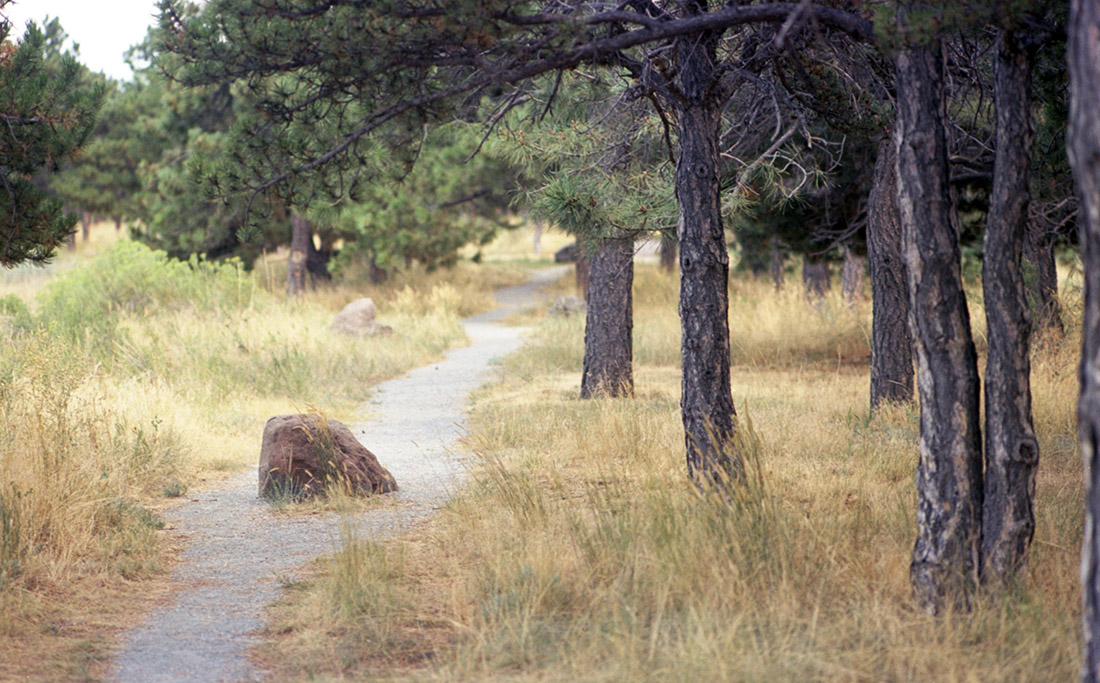
If you’re hoping to sell your work, be aware that you can’t sell something no one knows about. You must, in that case, not only share your work, but take that a step further and market both your work and yourself. In addition, understanding the reactions of others can help you to better understand the audience for your work as you develop your sense of your viewers.

As time goes on, sharing your work with others can help you adjust your direction on a long project, or narrow your focus if your intended subject turns out to be too broad. By synthesizing the opinions of others you can mentally poll their interpretations and change course when you recognize what’s working and what isn’t.

Through all of this, though, don’t ignore negative or unexpected feedback. It’s easy to outright dismiss things that seem totally off-base, but if they are anything other than worthless trolling, you’d be best served to at least consider them for a moment. Dispassionately reflecting on the wide variety of reactions you’ll get can serve to help you avoid building an echo chamber; if all the feedback you’re getting is sycophantic and disingenuous flattery, you risk becoming full of yourself and losing your valuable self-doubt.

In spite of that, some positive feedback is always nice. Especially if it helps you find the positive in work about which you had misgivings, it may help fuel your aspiration and motivate you. In the best circumstances, sharing can kindle an ongoing discourse with viewers; a self-sustaining conversation that offers more insight as you continue to improve and share new work. At worst, others’ ideas may act as a kind of external brainstorming session that can at least give you new ideas.

Most of all, sharing forces you to learn a modicum of humility and develop your open mind, without which you will eventually self destruct. Sharing leads to learning and improvement, which leads to further sharing, which leads to… you get the point. Each act of sharing gets you something that can’t be gotten again; the exact moment and circumstances and viewer and the work you share form a decisive moment of their own unlike any other opportunity for growth you’ll ever have.

We are our own harshest critics most of the time. While the last thing we generally want from a critique is to have smoke blown up our skirts, it can occasionally be nice to hear that our work is appreciated by others. Ignore the haters, listen to the thinkers who ofter thoughtful criticisms, and let yourself occasionally bask in the praise.

In the interest of fairness, I invite any and all critique of the five images attached to this post in the comments below. Please, pick them apart and help me improve my next batch!

Wild Horse, Colorado
Wild Horse, Colorado, September 2015. (Daniel J. Schneider)

Mamiya/Sekor 500TL: Big, chunky, and disappointing

The Mamiya 500TL
The Mamiya 500TL. (Daniel J. Schneider)

Mamiya, known for making a variety of excellent professional medium format cameras, once made budget 35mm SLRs, too. The 500TL is one of them.

On paper, the 500TL isn’t a bad camera. It was even a solid match for the Miranda Sensorex and Pentax Spotmatic, its chief competitors when it was released in 1966.

Unfortunately, while it has some interesting features and is well-built, it comes off as kind of kludgy and half-baked, at least to me.

The Camera

Overall, the 500TL is a very simple, all-manual camera. The TL line was Mamiya’s first to feature a through-the-lens CdS-cell light meter. The 1000TL offered a self-timer and 1/1000 top shutter speed that the 500TL lacks. Later DTL models included dual light meters — the spot meter and an averaging meter — with a selector switch to the left of the lens mount.

Mamiya 500TL viewfinder
Through the viewfinder. The brownish patch in the bottom center is the light meter area; the needle to the right indicates the exposure. The center spot is a dim microprism focusing aid. (Daniel J. Schneider)

The light meter, interestingly, is a spot meter. The original plans for Asahi’s Spotmatic called for a spot meter, but an averaging meter was what made it out of the factory in the end. Mamiya TLs have a small patch in the bottom-center of the viewfinder that indicates the meter target.

Much like a Nikon, pulling the film advance lever out about 30 degrees enables the light meter, and once snapped out, the advance lever serves as a stop-down lever, too. Pushing it back in against spring tension stops down the lens for metering, and provides depth-of-field preview. When you’re done, the center hub of the advance lever is a button which, when pressed, releases the advance lever so it moves back to the closed position.

A big, rounded shutter release button, with a standard release cable thread, and a big shutter speed selector knob accompany the advance lever on the top right of the camera. A film speed selector with markings in both ASA and DIN is incorporated into the shutter speed selector, and offers speeds from ASA 25 to 800 (DIN 15 to 30). Shutter speeds from 1/500 second down to 1 second, and Bulb, are available.

A very simple rewind knob with a flip-out crank lever is alone on the left shoulder of the camera. Below it, on the side of the camera, a small lever pulls up to release the back cover. If you’ve ever loaded film into a camera, you’ll find this one easy to load and unload.

Mamiya 500TL top cover controls
Mamiya 500TL top cover controls. (Daniel J. Schneider)

A universal m42 screw mount permits the use of a wide variety of lenses. On the side of the lens mount housing are two PC sync sockets for X-sync and FP-sync. Flash-sync shutter speed is 1/60 second, marked in red on the selector knob.

In the viewfinder, above the metering patch, a centered microprism spot is the only focusing aid. The light meter display is a match-needle type with a large (backwards) letter “C,” the center of which indicates correct exposure. Plus and minus symbols above and below indicate exactly one stop over or under correct exposure, and the needle is capable of indicating two stops over or under accurately at a point beyond either symbol equivalent to the distance between the symbol and the center of the “C.”

The bottom cover has a standard 1/4-20 thread tripod socket and the take-up spool release button, which stays in when pushed. The battery cover has room for a single SR44 battery behind it.

On the front corners you’ll find heavy-duty strap lugs. The 500TL includes no other features, not even an accessory shoe, although one can be added with a simple adapter.

Karmann Ghia
A restored Karmann Ghia in Denver’s Cherry Creek North shopping district. (Daniel J. Schneider)

The Experience

I bought the 500TL at a thrift store with no lens, so I tested it with the Hanimex 35mm f/2.8 that I used for the first roll through my first Spotmatic.

The reality is that there’s nothing wrong with the 500TL. It’s so basic there’s simply not a real opportunity for it to not be adequate. The biggest annoyance I can think of is the spot meter, which really makes it more accurate — just requires a little more thought about where you’re pointing it when metering.

Where it falls short for me is in the look-and-feel department. It’s blocky, and not in the cool, retro way of the Argus C3.

It’s almost as big as a Nikon F2, but thicker from front to back. It fills my big hands up, but manages to be uncomfortable with its relatively sharp corners. It’s weight feels more like the result of hastiness and imprecision than necessity and engineering.

The shutter speed selector is difficult to turn, and the film speed selector is fiddly. You have to really pull up on the outer ring to adjust the film speed, and it’s tedious. I found the viewfinder dim, and I felt focusing was difficult because the microprism patch is very small and seems to have fairly low contrast in comparison to others I’ve used.

Karmann Ghia interior
Interior detail of a restored Karmann Ghia. (Daniel J. Schneider)

The multi-function advance lever is actually pretty cool, but it’s not intuitive. I didn’t understand it at all until I’d read about its functions online. One more thing to recommend the 500TL: it’s fully mechanical, using a battery only to operate the light meter.

Everything else about the operation of the camera is unworthy of a detailed report — it’s all just fine. Adequate. Perfectly, boringly, adequate.

The pictures it takes, too, are just fine. This is not a review of the Hanimex lens, either, which is responsible for far more of the images’ quality than the camera body itself. A camera is just a light-tight box with a method for introducing controlled bursts of light, and the 500TL does that part perfectly well.

I know a lot of these found their way to the U.S. by way of soldiers headed to or returning from Vietnam in the late 1960s, as they were for sale in lots of base exchanges. They’re a dime a dozen now, figuratively. Literally, they sell for less than $10 with lenses and cases.

Sadly, it just isn’t special. Hold the Mamiya in one hand, and the Pentax ME Super or Nikon FM2n, in the other, and it’s pretty clear why Mamiya didn’t succeed in the 35mm SLR market.

If all you need is a solid light-tight box, this one will do fine if you’re on a McDonald’s dollar-menu budget. If you’re not — even if you’re only on a Chipotle or Panera budget — get a Pentax K1000.

Here are some more of my test shots, made with expired Kodak Gold and a roll of Agfa APX 100.

Country Club historic house
Back fence of a large property in Denver’s County Club neighborhood with a very old house and barn. (Daniel J. Schneider)
1960 Volvo PV544
Front detail of a 1960 Volvo PV544, which appears to have been restored at one time. (Daniel J. Schneider)
Cherry Cricket sign
The Cherry Cricket in Cherry Creek sports a fancy neon sign. The “Duffy’s” portion on top rotates around and around. (Daniel J. Schneider)
Through the door
View through a window in the door of an old house in the Country Club neighborhood that sits awaiting demolition (it’s long gone as of this writing). Historic homes are being demolished daily in Denver to make way for duplex, triplexes and tiny condo buildings. (Daniel J. Schneider)
DeLaney farm barn interior
Interior of a small barn on the DeLaney Farm Historic Park in Aurora, Colo. (Daniel J. Schneider)
Leaves in the sun
Leaves in the sun. (Daniel J. Schneider)
Baker home
A home with a large front-yard garden in Denver’s Baker neighborhood. (Daniel J. Schneider)
Long shadow
Long shadows and a small mural on the back of a Cherry Creek North business in Denver. (Daniel J. Schneider)
Coffee
Coffee sign on reclaimed wood. (Daniel J. Schneider)

How I shot a ton of film on Expired Film Day 2016

Ford truck at Pumpkin Patch
The 1938-39 one-and-one-half ton Ford truck at the Rocky Mountain Pumpkin Patch near Longmont, Colo. has been surprisingly well maintained. Taken on Expired Film Day 2016 with my Pentax 6×7 on Kodak Porta 160VC that had expired in 2000. (Daniel J. Schneider)

A lot of people have commented on the ambitiousness of my plan to shoot nearly a dozen rolls of film on Expired Film Day last year. Here’s how I did it.

It really wasn’t as ambitious as it sounds, for one thing. I’m pretty sure most of the people who have commented were thinking that meant nearly a dozen rolls of 36-exposure 135 film — 300-400 exposures — which would be hard. But that’s not what I did.

I did take some 35mm film, but most of my supply was smaller — at least in terms of the number of exposures per roll.

I took a lot of 120 and 220 film for the Pentax 6×7, which means either 10 or 20 frames a roll. The 127 film in my Brownie Bullet was only good for 8 exposures, and so was the film in the Kodak Six-16 Brownie Junior. Twelve frames for the 120 film in the Agfa B2 Speedex — a 6×6 camera. The 35mm film I took was all 24-exposure rolls save for one — and that one was only 20 exposures. All told, I made considerably fewer than 200 exposures, spread across seven or eight cameras.

Rocky Mountain Pumpkin Ranch truck
The same Ford truck at The Rocky Mountain Pumpkin Ranch outside of Longmont, again on Expired Film Day, but this time taken with my Agfa B2 Speedex (before repair) on c. 1955 Agfa Isopan FF film. (Daniel J. Schneider)

Okay, it still sounds ambitious, even to me. But it wound up not being hard.

Part of my plan was to ensure I’d get some kind of usable results from at least some, if not all, of the film I took. I think of that as redundancy for the sake of preparedness.

If you know even a little about electronics — what you might’ve learned in a junior high science class, for example — you might remember the difference between a circuit where current flows through multiple components one at a time, in order, and circuits where it flows through multiple paths concurrently. The former is a series circuit, and the latter a parallel circuit (more about the differences).

If I’d been shooting the film in series, it surely would’ve been quite an undertaking. Sure, when I spend an entire day on the plains I tend to take 80-100 pictures with the Pentax. But March 15 was a shorter day than those in late August or mid-September. And I spent a chunk of the morning getting my Leica back from the shop.

1938-39 Ford truck
Another Expired Film Day image of the one-and-one-half-ton Ford at the Pumpkin Ranch outside of Longmont. Taken with my Kodak Brownie Bullet camera on nearly-fresh Efke R100 film. (Daniel J. Schneider)

Instead, I chose to shoot in parallel. I loaded all the cameras, and each time I stopped the Jeep I picked several cameras and made a picture or two with each one.

Which cameras I chose was based in part on getting a variety of images on each roll of film, on which had the most frames left in it, and on the scene. In some cases I chose the camera for its ability to fit my visualization of the scene I saw, and in others because the scene might be likely to show favorably some aspect of the camera.

In the end I managed to finish off 10 or 11 rolls of film, I think. It’s hard to remember exactly, because there were some failures and I’m too lazy to dig up my notes. At least 28 frames’ worth failed utterly, and one roll was about half blank due to mechanical issues. I think I finished with right around 100 usable frames in the end.

Of those frames, virtually none are unique. Almost all were replicated, at least the same scene from the same or a similar vantage point, on two or more cameras, except toward the end of the day as I was finishing up rolls. As noted, all the photos on this post are of the same truck, taken with three cameras and four films. But you knew that already because you read the captions, right?

This year I don’t plan to be quite as ambitious, but I do plan to take multiple films and cameras once again. Expired Film Day 2017 is less than two months away!

1938 Ford Truck
That same 1938-39 Ford at The Rocky Mountain Pumpkin Ranch, on Expired Film Day, March 15, 2016, with my Pentax 6×7 on Kodak Vericolor III VPS. (Daniel J. Schneider)

Yashica Lynx 1000: A brilliant rangefinder can be had for a song

Yashica Lynx 1000
The Yashica Lynx 1000 is a very nice early-1960s Japanese rangefinder with a fast 45mm f/1.8 lens and best-in-class 1/1000s top shutter speed. (Daniel J. Schneider)

The Yashica Lynx 1000 offers excellent optics and easy handling in a well-built package for a bargain-basement price.

This may well be the only 1960s Japanese rangefinder I keep in my Permanent Collection as I seek to divest myself of most of the cameras I’ve collected. Previously it was going to be the Petri 7, but I think I might like the Yashica just a little bit better — and it doesn’t have a screwed-up aperture like the Petri.

The Yashica Lynx series was ahead of its time in one way or another for most of its run, eventually producing the Lynx 14 with its massive f/1.4 lens and paving the way for the successful and long-lived Electro 35 series, but the Lynx 1000 was the first.

The camera

The Lynx 1000 was introduced in 1960 along with the Yashica Minister, the company’s first cameras with onboard selenium light meters. The Lynx 1000 was joined by the Lynx 5000 and Lynx 14 in 1964, and 1965 was the 1000 model’s final year of production.

The fastest shutter speed, which gave the camera its numeric designation, was a blistering 1/1000 second. The Copal SV leaf shutter blew away most all competition. Shutter speeds through 1 second, as well as bulb mode, round out the selection.

The in-lens design, with the shutter between the front and rear lens groups, allowed the blazing shutter to M-sync a medium-peak flash bulb at any speed. X-sync for electronic flash is at a respectable 1/60 second or slower. A PC-type flash sync socket is position to the right of the lens on the front of the camera, and a cold accessory shoe sits on the top of the camera.

The coated, color-corrected 6-element Yashinon lens sports a good normal focal length of 45 millimeters, opens up to a maximum aperture of f/1.8, and has a 46mm filter thread.

The shutter speed selector ring, at the front of the lens barrel, has a type of friction coupling to the aperture ring behind it. You can select an aperture without moving the shutter speed ring, but adjusting the speed will adjust the aperture as well.

There are detents that gently stop the shutter speed selector at each marked speed, but the aperture ring turns smoothly, making the aperture setting infinitely variable. The minimum aperture is another place where the Lynx 1000 outshines much of the competition — stopping all the way down to f/22.

Lynx viewfinder
In the viewfinder, the brightline framing guides move to correct for parallax error, and the light meter needle is (barely) visible in the top center. (Daniel J. Schneider)

The film speed selector for the fully-coupled light meter is integrated into the aperture ring, and adjusted by means of lever on the right side of the lens barrel. Film speeds from ASA 10 through ASA 800 are available.

Focus, shutter speed and aperture all align with a red diamond on the lens barrel, which has depth-of-field markings surrounding it. On the bottom of the aperture ring, a tiny lever activates an 8-second self-timer.

The focus ring, at the back of the lens assembly, has a lever on the lower left that makes it easy to adjust with one finger. It is coupled to the rangefinder, and all the settings are coupled to the light meter.

In the viewfinder, a bright rangefinder patch is surrounded by brightline framing guides which, as you adjust focus closer to the camera, move down and to the right to compensate for parallax error. In the top center the light meter needle is visible in a dark box, with a centered white spot to indicate correct exposure. The needle moves to either side of the spot, indicating over- (to the right) or under-exposure.

Yashica Lynx ASA-DIN chart
A handy ASA-DIN film speed conversion chart is affixed inside the back door of the Yashica Lynx 1000. (Daniel J. Schneider)

The physical meter needle reflected in the viewfinder is also visible in a labeled (over/under) readout in the center of the top cover, next to the accessory shoe. To the left is the rewind knob with its flip-out crank and a film plane indicator mark.

Near the right-hand side of the top cover, the shutter release button is threaded for a standard cable release. The film advance lever sits atop a frame counter that counts up, but has to be reset manually when changing film. The edge is knurled slightly and can be turned with a fingertip.

To open the back cover and load film, a small button on the left-hand end of the bottom plate must be moved sideways in a small arc, and then depressed, to release the latch. Once open, the camera is straightforward to load. Note the ASA-DIN conversion table conveniently located on the inside of the film door.

Also on the bottom cover are a standard 1/4-20 threaded tripod socket, and a take-up spool release button, which locks in to allow rewinding. There are strap lugs on either end of the top cover.

Yashica Lynx top
Yashica Lynx 1000 top view. Most controls are on the lens barrel, and the selenium exposure meter’s readout is on the top cover. (Daniel J. Schneider)

Using the Lynx

The Lynx 1000 is heavy for its size, but not objectionably so. It feels very solidly built and the heft lends an air of quality to it. It’s not as large as the Konica Auto S2, but is more comparable in size and heft to the Petri 7.

The overall control layout is very good. The key controls — aperture, shutter speed, and focus — are all on the lens barrel, and the shutter release button and film advance are well placed and easy to operate. The film advance rotates about 180 degrees, and moves quickly and easily. Both the tension and the travel distance on the shutter release button are moderate and smooth.

Loading, unloading, and rewinding are mostly trouble-free, although the knob on the rewind crank handle is small, and the very-square end of the crank arm is easy to catch a fingernail on, derailing your progress. Not a deal-breaker, by any means.

Rain barrel
Rain barrel. (Daniel J. Schneider)

The viewfinder has a bit of a green tint to it, but it’s still fairly bright. The rangefinder patch in the center is small, but quite contrasty, making focusing easy even in fairly low light. The brightline guides are very bright and easy to see, and the automatic parallax correction is just brilliant.

The light meter readout is fairly dim in the viewfinder, but as the selenium cell in my Lynx is dead, I don’t particularly mind. I’m definitely not going to let that stop me from using this camera again, because it was a pleasure and, as you can see, it takes really nice pictures. The fact that it never needs batteries, even if the meter were working, is a definite plus in my book.

The semi-coupled shutter speed and aperture selection rings were bothersome at first, but once I got used to them I realized it’s quite easy to adjust the shutter speed with a couple of clicks, then turn the aperture ring back to where it started. As long as your light isn’t changing, you can set a pairing that works and then adjust the two in concert to prioritize depth-of-field over shutter speed, or vice versa.

The Lynx is fully manual, in case you hadn’t guessed by now. No automatic exposure modes at all. And I wouldn’t have it any other way. Very few of its more popular competitors offer full manual exposure controls, and with light meter cells dying of old age and mercury batteries long-since obsolete, I think manual controls are critical for future-proofing.

DeLaney Round Barn
The historic DeLaney Round Barn in Aurora, Colo. (Daniel J. Schneider)

I think the lens is probably underrated by many who would seek to compare it to the larger aperture on the Lynx 14, which is very well-regarded. Not that the 45mm f/1.8 on the Lynx 1000 is run down by reviewers — in fact, it’s praised — but it doesn’t get the same press as some other cult rangefinders of the era. And I think it should.

With a maximum aperture of f/1.8, it’s wide enough for shooting indoors in a well-lit room with ASA 400 film, and the minimum f/22 aperture means you can get crazy deep depth-of-field when you need it. Distortion is very well controlled — I see the slightest bit of barrel distortion in just a couple of these shots, but it’s extremely restrained — and chromatic aberration is virtually nonexistent.

The Yashinon’s contrast and color rendition are excellent, and the tiny bit of vignetting present is well within the range of acceptability in my book. And sharp? I hope you can see in my examples that it’s easily on par with all the best Japanese rangefinders you’ll find recommended.

Pond reflection
A No Skating sign is important as small ponds freeze for long periods of time in a Denver winter, but are rarely safe to walk on. (Daniel J. Schneider)

The opening latch for the film door is fairly unique, but easy to operate. It seems quite secure thanks to its unusual design, as well.

The biggest complaint for me is the frame counter, which has to be reset to zero manually each time you load film. Since it counts up, though, you don’t have to worry about the length of roll you’ve loaded. And there’s nothing to stop you from ignoring it, and just shooting until the advance lever meets resistance. That’s what I do.

The focus adjustment on my Lynx 1000 is very stiff. I suspect old lubricants have begun to dry out, although exercising it a bit does seem to help for awhile. The stiffness does make it very good at fine focusing, however.

DeLaney Farm House reflection
Reflection in the window of the historic DeLaney Farm House. (Daniel J. Schneider)

Of course the 1/1000 second top shutter speed is a great asset under Colorado’s bright, harsh sun, and allows larger apertures in daylight than most similarly featured rangefinders of the era are capable of. In spite of its impressive specs, that Lynx 1000 is still very quiet, even if it’s not quite small enough to be considered stealthy.

I was colored against this camera when I first picked it up from the shelf, in part because Yashica’s Electro 35 was a bit of a disappointment to me, and in part because I like the Petri 7 so much, but I wound up really liking the Lynx.

In addition to all the great features, the Lynx can be had for very modest prices, even from eBay. To me, it represents an excellent value and I highly recommend giving one a try if you have the chance.

Here are some more test shots from a roll of Ilford FP4+ and a roll of expired Fuji Superia 200:

Walking path
This soft gravel path encircles Washington Park in Denver, providing a two-mile circuit for runners, walkers and joggers. No other modes of transportation are allowed. (Daniel J. Schneider)
DeLaney Round Barn
Entrance detail of the historic DeLaney Round Barn in Aurora, Colo. (Daniel J. Schneider)
Wash Park flowers
Detail of the flower garden in Denver’s Washington Park. (Daniel J. Schneider)
John Gully Homestead House
John Gully Homestead House in the DeLaney Farm Historic District in Aurora, Colo. (Daniel J. Schneider)
Washington Park pond
Washington Park has half a dozen bodies of water within its bounds, including small fish ponds like this one. (Daniel J. Schneider)
Lamp
An outdoor lamp in the yard of the DeLaney Farm Historic District. (Daniel J. Schneider)
City Ditch bridge
A bridge over City Ditch in Washington Park, Denver. (Daniel J. Schneider)
Shed texture
Faded paint and wood grain texture on a loafing shed in Aurora, Colo. (Daniel J. Schneider)
Kitchen through the window
A historic kitchen on the DeLaney Farm in Aurora, Colo., seen through the window of the cottage. (Daniel J. Schneider)

When and why I use a monopod

Manfrotto monopod
My Manfrotto 679B monopod. It’s a “heavy” aluminum beast with a 22-pound capacity and a maximum height of nearly 6 feet. (Daniel J. Schneider)

The most important tool of the landscape photographer, aside from the camera itself, is the tripod. But sometimes, one leg is better than three.

It’s not really something I even think about often, because a monopod is just a tool that fits for certain situations. But the other morning I saw a tweet in my feed asking about them:

“Well, of course I do,” I thought to myself. But I realized that, as with so many things I mention on my blog, what is self-evident to me isn’t to everyone. And more likely, hasn’t always been that easy for me to see. Since half (or more) of the reason I write these posts is to share the knowledge I’m building in my photographic journey — so others can learn from my mistakes, benefit from my experience, and generally find answers more easily to questions I’ve struggled to answer myself — I realized this was a candidate for a post.

So yes, I own a monopod. And while I use it somewhat infrequently, when I do it’s exactly the right tool for the job.

I don’t have a lot of gear recommendations on this front. I think anything sturdy enough for your camera and tall enough for your eyes is probably just fine. I’d even hesitate to recommend shelling out a lot of green for titanium or carbon fiber, because my aluminum monopod still weighs less than my carbon-fiber tripod.

Manfrotto tilt head
The Manfrotto 234RC tilt head is a bare-bones head that lets me angle the camera on the monopod if needed and supports Manfrotto 200PL-14 quick-release mounting plates with a very secure double-lock system. (Daniel J. Schneider)

I have a Manfrotto 679B monopod with a Manfrotto 234RC tilt head, and a Manfrotto 055XPROB tripod with a Manfrotto 498RC2 mini ball head. Both heads use the same Manfrotto 200PL-14 quick-release plates for easy swapping.

If you’ve clicked the links above, you can see my monopod and head are about the cheapest Manfrotto offers, and I bought them for the rugged durability and high weight capacity. For many applications you could get by just fine with a really cheap one (ask photo-buddy Craig Pindell about his $20 carbon fiber monopod).

Now we’ve got the gear questions out of the way, let’s get to the functionality.

Craig quickly pointed out that they’ve been a staple of sports photography for years:

Which mostly mirrored my answer on Twitter.

I also added wildlife photography to the list. Not the kind where you sit in a duck blind waiting for a Heffalump to drink from the perfect spot on the shore, but the kind where you’re just out in nature and you know there are Woozles likely to bound across your path.

But really, it’s not just about what your subject is. It’s about your equipment and movement.

I primarily use my monopod with my 300mm lenses — the 300mm f/4 SMC Pentax 67 on my Pentax 6×7 and the 300mm f/4.5 Nikkor-H Auto on my Nikon F2. Both are heavy combinations, and the Pentax in particular is very hard to hold steady with even my ogre-sized hands alone. I don’t often photograph sports, but I do sometimes try to photograph wildlife. Even without the wildlife, the compression and perspective offered by the 300mm lens are occasionally desirable.

I ran into 20-year veteran Denver Post photojournalist Andy Cross while thinking about this post and asked his thoughts. “It’s all about those bigger lenses,” he said.

Heavy glass is harder to hold steady with your hands alone, and greater focal lengths amplify every minute movement into blur. A monopod is a quick and highly portable way to improve stability.

Cross also pointed out that it’s an important tool for balancing a bulky camera-lens combination on your shoulder when you have to move quickly. As with most other respondents to the original tweet, sports and some wildlife situations were the focus of my discussion with Cross.

Tripods aren’t allowed on the sidelines in NFL stadiums for safety reasons, anyway, Cross said. And they are barred or very limited at most other sporting events, as well. Even concerts often prohibit tripods for space and safety reasons.

One situation I hadn’t thought of that Cross brought up was during political events. Whether covering the arrival of a dignitary at the airport, or just following a speech or rally, a monopod is more versatile than a tripod for moving between angles and positions quickly. Not to mention critical when you’re crammed on a tiny riser with dozens of other photojournalists and videographers.

The key factors in all of these scenarios are:

  • Unpredictable subjects (whether moving or changing)
  • Heavy or bulky gear (muscle fatigue will make your arms shake)
  • Very long focal length lenses (usually 300 millimeters or longer)
  • Rapid movement of the photographer (whether from place to place, or changing angle or direction)

For landscapes, go for a three-legged support. The scenery isn’t moving fast enough for you to need the extra mobility of a monopod, and while a monopod can add enough stability for long-ish exposures, it’s got nothing on a tripod for any shutter speed longer than about one quarter of a second.

If you or your subject are moving, and especially if you’re using a long or heavy lens, a monopod may be for you. If you’re shooting sports, you’re going to have every single factor in play and a monopod becomes essential. “I couldn’t shoot sports without a monopod,” Cross says.

Postscript: If you’re interested in more of Andy’s work, here are a few examples:

Miranda Sensorex: A honking hunk of funk

Miranda Sensorex front
Miranda Sensorex front view. Note the front-mounted shutter release button and tucked-in self-timer lever left of the lens, and the maximum aperture knob on the top right. (Daniel J. Schneider)

The Miranda Sensorex hit the scene in 1967 and brought with it a host of forward-thinking features that set it apart, but also made it feel just a bit off.

It wasn’t the first Miranda with a light meter, but it was the first with a through-the-lens CdS-cell meter. Thanks to the interchangeable viewfinders the Sensorex offered, the meter cell had to be incorporated into the mirror — but this meant the meter worked with any viewfinder.

While the options on the Sensorex are not revolutionary or out-of-the-ordinary, a lot of minor design quirks make it particularly difficult to adjust to.

The features

The Sensorex is built around a horizontal-travel cloth focal-plane shutter, like so many other cameras of its day. The shutter’s fastest speed is 1/1000, and the selector knob offers speeds from that down to 1 full second, as well as Bulb mode. The knob sits on the far-right end of the top cover, over the film advance lever.

Incorporated into the shutter speed knob is a film speed selector of the typical lift-and-turn variety. The outer ring, however, is coupled by gears to the film speed dial visible through a small window on the top of the shutter speed dial. As a result, unlike many other cameras, when you lift and turn the outer ring, the film speed dial moves in the opposite direction of the ring — so when you turn the ring counterclockwise, the dial rotates clockwise, and vice versa. Film speeds from ASA 25 to 1600 (marked as “1.6M”) are available, with marks every 1/3-stop.

Top view of the Sensorex
A top view of the Sensorex showing the combined shutter-speed selector and film advance lever, and the power switch-rewind knob combo. (Daniel J. Schneider)

The film advance itself travels in an arc of 180 degrees, advancing one frame and setting the shutter, as well as sliding an orange shutter-ready flag into view in the “signal window” next to the advance. The advance also automatically increases the frame count, visible in a round window just to the right of the viewfinder housing. The frame counter resets automatically when the back cover is opened.

Once the shutter is ready, it can be released by means of the button on the front of the camera, to the right of the lens mount. Below the shutter release button is a self-timer lever, which is infinitely variable and rotates down up to 90 degrees, with a maximum delay of 10 seconds.

Loading film should look familiar to anyone who’s used an SLR camera made in the second half of the 20th century. Accessing the film, however, requires pressing a button on the left end of the back cover before you can slide up the latch. When you close the door, you’ll need to manually slide the latch back into place to lock it. More details can be found on page 5 of this manual.

Also on the left-hand end of the camera, on the back of the top cover, is the battery compartment. A cover with a knurled edge unscrews to reveal a Mallory PX625 mercury battery. Next to the battery cover is a sliding button that releases the interchangeable viewfinder.

Sensorex viewfinder
Looking through the viewfinder of the Miranda Sensorex you see only the microprism patch in the center and the simple match-needle light meter on the right. The straight needle falls out of the frame when the meter is off. (Daniel J. Schneider)

In the viewfinder, a match-needle for the light meter is the only display. The ring needle is mechanically coupled to the aperture, film speed and shutter speed settings, and the straight needle is electronically controlled by the CdS cell.

The light meter’s sensing element is actually composed of three cells which measure an average reading over an area that covers roughly the center 60 percent of the lower half of the frame (see page 12 of the manual). This is meant to reduce or eliminate underexposure caused by the sky. The focusing screen is a rudimentary ground glass plate with a center microprism patch as the only focusing aid.

On the top cover, left of the viewfinder, the rewind knob sits above the power and flash sync selector switches. The rewind knob slides up to disengage from the film cassette, and features a flip-out crank handle. The power switch is a lever that supplies power to the light meter when switched to “ON.” The ring below the rewind knob selects between X-sync for electronic flash and FP for Forward Point flash bulbs.

On the front of the top cover, below the rewind knob, is the lens aperture setting dial. It must be set to match the maximum aperture of the lens mounted on the camera in order to enable open-aperture metering. It can be ignored and stop-down metering used by depressing the depth-of-field preview button on the top left of the lens, near the mount.

Lenses are mounted with a bayonet system, and a button on the right side of the lens, near the shutter release on the camera, unlocks the lens so it can be removed. When mounted, a tab on the lens’s aperture ring mechanically couples to a knob on the lens mount in order to relay the aperture setting to the light meter’s ring needle.

Miranda provided Sensorexes with a variety of standard 50mm lens, and the 50mm f/1.8 I used in testing has no detent stops for full-stop apertures, allowing infinite variability between stops. It is marked for apertures from f/1.8 down to a minimum f/16.

On the bottom cover, a standard tripod socket and the take-up spool release button are the only features. The Sensorex has strap lugs on the front corners below the edge of the top cover. There is no accessory shoe provided, although viewfinders were sold with some models that had a cold shoe added. There is a PC-sync socket on the top of the left edge of the camera.

Griff's front door
Front door of the shuttered Griff’s Hamburgers on South Broadway in Denver. I miss their greasy triple-deckers already. (Daniel J. Schneider)

Getting used to it

The Sensorex is a camera I’ve heard about before, but I wasn’t fully prepared for its funky design differences when I got my hands on one. It’s not that it’s not recognizable as a camera or anything, but they made a lot of little deviations from design standards for SLR cameras in the 1960s that take a little getting-used-to.

1975-78 Toyota FJ-40 Land Cruiser
Right-rear corner of a 1975-78 Toyota FJ-40 Land Cruiser, spotted in Denver’s Baker neighborhood. (Daniel J. Schneider)

The three main pain points in resetting your muscle memory for the Sensorex are: the shutter release button, the film and shutter speed knob, and the aperture setting. All three are relatively minor, but taken together represent virtually all the important functions an SLR camera provides to set it apart from a box camera.

Strange positioning is the biggest issue with the shutter release button. And it’s not exactly a problem; Miranda obviously knew what they were doing when they bucked tradition and put it on the front. In that position, it’s less likely to move the camera and cause shake or alter composition when depressed. The pressure required to depress the release is enough that it doesn’t happen by accident, but it’s easy enough that it can be operated very smoothly, adding to its stability-improving performance. The position, though, probably takes more adjustment than anything else on the Sensorex. I found my index finger pushing fruitlessly on the frame counter window a number of times.

The film speed and shutter speed selectors are likewise positioned oddly. For choosing a shutter speed, the knob is more difficult to activate with one finger — in part due to its having tight detents and requiring considerable force to rotate — than those positioned further inboard of the edge. The film speed selector dial turning opposite the direction of the ring works technically just fine, but runs counter to what you’ll be used to if you have used most any other SLR of this age. I turned it the wrong way and baffled myself momentarily each time I adjusted it.

Frustrating me more often than anything else, though, was the aperture setting. Because it uses a knob on the lower left of the lens to couple the lens to the body, it feels to the hand very much like the focus knobs on many period rangefinder cameras. And since it doesn’t stop at marked apertures, either, it turns fluidly. This meant I was constantly messing up my aperture when I meant to be focusing, which required a lot of readjusting to get my exposure right before recomposing and focusing correctly.

Saint Francis de Sales Catholic Church
Saint Francis de Sales Catholic Church in Denver. (Daniel J. Schneider)

The film advance lever works smoothly and easily, and it returns strongly when released. The only problem I noted with that is the lever frequently overshoots its “open” position — about 30 degrees out from its “closed” position — and flies all the way back to sitting fully over the top cover, where it is much more difficult to get ahold of and operate. I frequently had to reach my index finger back over the top cover and push the lever out part way before I could get my thumb behind it to operate it fully.

I found the back cover latch very secure, but the difficulty of operating it with one hand — near impossibility, actually — frustrated me a little. Loading and unloading was typical and not at all difficult.

In spite of these foibles, the Sensorex has a lot to recommend it. It’s solid and weighty, and feels more like a Nikon F2 than a Pentax Spotmatic. Its gently curved edges and just-right thickness make it comfortable in the hands, and the placement of the self-timer lever — very close to the lens mount — make it less prone to accidental operation than the timer levers on many comparable SLRs of the period.

The viewfinder’s microprism patch is very contrasty and easy to use, and overall the viewfinder feels big and fairly bright. I noted the lack of shutter speed or aperture displays in the viewfinder, but I can live without them.

The 50mm f/1.8 lens requires a lot of turning to achieve focus, but that makes fine focusing easy. Optically, I’d say it’s nothing to write home about, but it’s a perfectly serviceable lens. Contrast and color seemed fine to me, and I didn’t note any significant distortion or chromatic aberration.

I wasn’t able to test the meter in mine, so I can’t speak to its ease-of-use or accuracy. It may or may not be dead — CdS cells seem to have a good track record. The battery, however, is stuck in mine. The cover is seized shut and I have been unable to break it free. I expect this is because the battery has corroded so severely it has welded the cover shut. Not a problem, though, as the Miranda’s shutter is fully mechanical and it still works just fine without a meter or a battery.

Overall, I’m impressed enough to recommend trying out the Miranda Sensorex if you get the chance. But I definitely would not trade my Nikon FM2n for one.

Here are a few more photos from my test rolls:

Griff's sign
The name has been removed, but it’s still clearly a Griff’s Hamburgers. The existence of a US West pay phone out front is just a reminder of how far back you step crossing their threshold. (Daniel J. Schneider)
Garage in Baker
An aging garage (possibly once a carriage house) in Denver’s Baker neighborhood. (Daniel J. Schneider)
Apartment building
An apartment building in Denver’s Speer neighborhood. (Daniel J. Schneider)
Outdoor decoration
Outdoor decorations in front of a house in Denver’s Speer neighborhood. (Daniel J. Schneider)
1956-58 Chevrolet 6400 truck
1956-58 Chevrolet 6400 2-ton truck, owned by the now-defunct Service Oil Company of Denver and still parked at their abandoned station in the Baker neighborhood. (Daniel J. Schneider)

Resolution time: Goals for 2017

Moving forward
Moving forward. Near Briggsdale, Colo., Nov. 2016. (Daniel J. Schneider)

It’s that time of year and everyone is making their resolutions for the new year. I’m not really one to resolve much, exactly, but I have goals in mind.

Last year it was my goal to produce a darkroom print, and I did finally accomplish that after Thanksgiving. It took me nearly all year, but I did it.

This year I’ve actually seen a dearth of resolutions from the film-believer community on Twitter, from whence comes most of my conversation and interaction with other photographers. I have, however, seen a few people discussing goals.

Projects seem to be in vogue again this year, though. 365 projects and 52-week challenges, etc. They were popular in 2016, too. Emily Gallagher laid out some options and described her intentions today and got me thinking.

Dustin Veitch, too, has his goals, though they are blog-related. I look forward to him fulfilling it, though. His simple, straightforward take on developing color negative film at home has the gears turning in my brain — and it’s still Jan. 1!

Steve Brokaw’s goals are all about different cameras, since he’s got so many (maybe more than me, at this point). I’m planning on spending a lot more time with a lot fewer cameras this year, myself.

So there are a lot of options. And I’ve tried and failed at several of these before. I’m too stuck in my ways, I think, and neither my finances nor my schedule are consistent and predictable enough to really support the success of any kind of daily or weekly project.

So for 2017, I’ve decided to make a couple goals that might seem a little simple, but which I think will challenge me to keep going without the potential to overwhelm. And which will let me work at the pace I’m used to.

  1. Produce at least 30 new photographs in my continuing work on the Eastern Plains of Colorado (number referring to final selected images, not just pumping three rolls of film through the Pentax 6×7)
  2. Successfully make 10 prints which I would be comfortable selling or giving away as representations of my work (my standards for myself are high, but not impossible — I can do this)
  3. Print, mount and frame enough images to hang in a bookstore, coffee shop or similar, alone or in a joint presentation with another artist (bigger than what I’ve done so far, I think)

That’s it. Maybe that sounds like a lot to some of you, and not much to others. I debated asking myself to make 50 new images, and 15, and on and on. I settled on 30 because that’s about the number I made in 2015 with which I was really happy.

The prints for hanging is what really scares me. Not the putting myself out there — disingenuous or not, the public’s response to my work has generally been good. In fact, I don’t trust it, but I’m learning to accept it. The expense of adequately framing the half-dozen or more images I think it will take to complete that task adequately could be a very expensive endeavor, though.

I’ll check back later in the year and update my readers how these things are going.

Happy New Year to all my readers, and to everyone who helps keep film manufacturers in business so I can keep doing what I love!

Method: A slow change to the focus of this blog

Downtown Denver
Downtown Denver as seen through a 300mm f/4.5 Nikkor-H lens on my Nikon F3, on Kodak Plus-X film. You can see what might be a little chromatic aberration on the left-hand edge of Wells Fargo Center (the current name of the former One United Bank Center, also known by locals as the “mailbox building” or “cash register building” due to its unique shape). (Daniel J. Schneider)

Don’t worry, I’m not going to abandon all I’ve done on this site; I’m just going to make a slow pivot. And it’s not about my photography, just how I share it.

For the past five years or so I’ve been posting test photos and reviews of vintage cameras found in thrift stores. Before that I published a few digital photos I was, at the time, fairly proud of — and would now almost rather forget (but I won’t delete them because, on the internet, what would be the point?).

Over time I started to review things more seriously and dig up deeper technical and historic details. I started publishing resources about things like where to get film processed, how to fight intellectual property thieves online, and how to join in the worldwide film-loving community.

Some of my deep reviews, especially “A year with the Nikon FM2n,” and the more recent “A year with the Pentax 6×7,” have been seen by dozens of people every day. Some of my writings on less-well-represented cameras, such as the Kodak No. 2 Folding Cartridge Hawkeye Model B and the Konica Auto S2 rangefinder, have likewise ranked well in searches for a long time.

16th Street Mall rest
Office workers enjoy the sun on a chilly afternoon in downtown, laying in the courtyard outside the World Trade Center Denver on the 16th Street Mall. Taken with the Olympus 35SP rangefinder. (Daniel J. Schneider)

And I know my reviews have improved a lot in that time. I’ve had so much fun collecting esoteric (and mostly not-so-esoteric) cameras from thrift stores and trying them out. And I’m not necessarily going to stop that. But, after seriously examining just how I classify my cameras and why I have so many (a bunch are for sale now), I’ve started to move my thinking to a different track.

Mentally, I’m much more focused on photography as a craft than as a hobby, and thinking more about the work than the tools. I’ve become somewhat tired of acquiring lots of cameras, old cameras, unique cameras. I’m more interested now in good cameras that fit the work I’m trying to do. And I’ll still be playing with expired film (I have a supply that will last quite a while), but I’ll be using more fresh film. In short, I’m getting more serious.

Along with that, I plan to shift — slowly — the focus of my writings on this blog. I still have a couple dozen camera reviews in the pipe, and I may find more in the meantime that get added to the queue, but there’s one major area of photography that I feel I’ve missed.

I haven’t written much about the method — the philosophy — of photography. Largely that’s been because I haven’t felt like I had a lot to say, or when I did have something to say, I wasn’t sure if I really had the expertise to say it.

The latter part, at least, hasn’t really changed. But I’ve decided that as more of the concepts I’ve studied have gelled for me I might be more qualified to opine upon them, if only to invite discussion and broaden my mind. If these writings are helpful only in bringing the subjects to others’ minds so that they set off on an independent line of study, I will consider that a great success.

Don’t worry, I’m not going to start preaching from my ethereal pulpit, and I can’t hope to rival great photography educators like Ansel Adams in my writings. But I hope that as my own thoughts on the subject evolve and grow I can share them here and get people thinking. If I manage to open some minds to the possibilities in the process, so much the better.
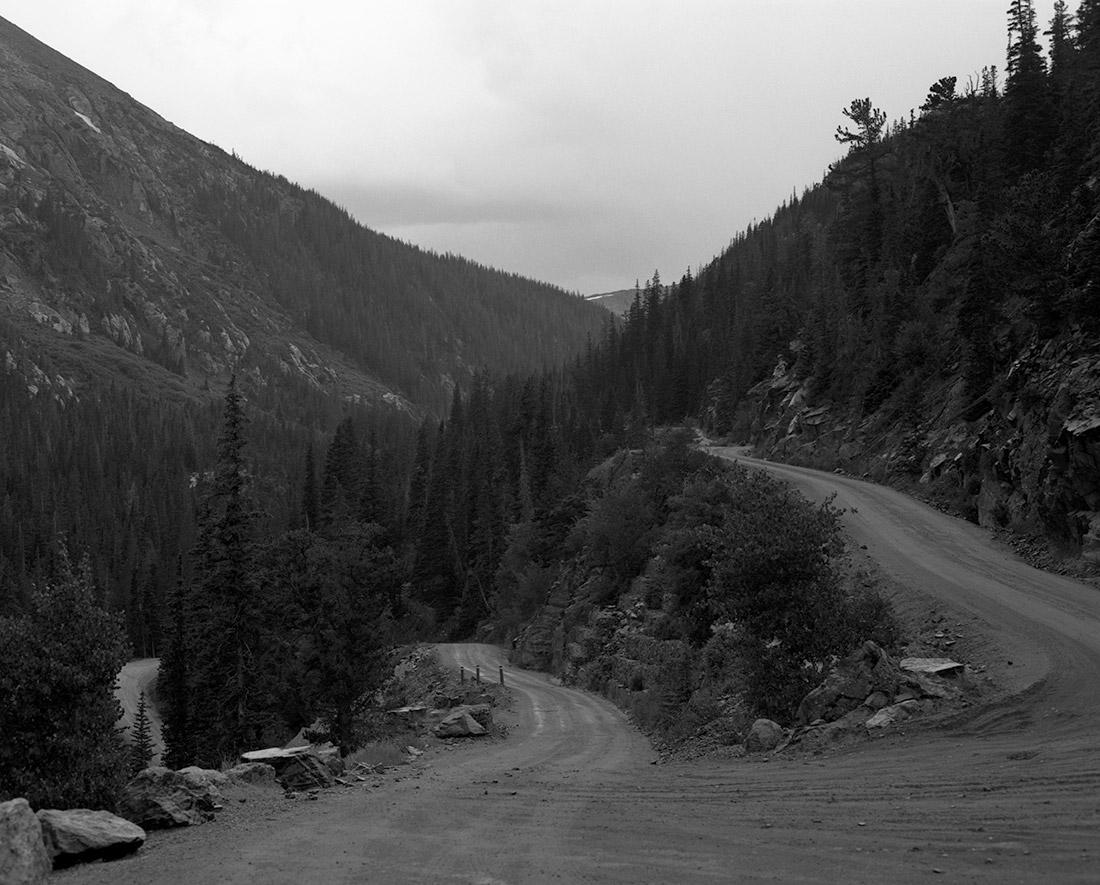
There will still be plenty of more technical stuff and fun things, too, don’t worry. I’m just moving from a focus on the camera as an end to the camera as a means, and I hope to discuss the products of the photographer-camera unit more than the tools themselves.

So this new occasional series will slowly replace the previous In My Bag/This Week series, because that series was largely about what I had found in thrift stores, what I was planning to review, and so on. I’ll still post them occasionally, I’m sure, but they will be less and less frequent.

The new Method category and series will focus more on the art of being a photographer: thinking like one, acting like one, and considering images as both artistic and documentary endeavors. There will still be technical aspects, but with more focus on how my ideas about being a photographer evolve. I suspect a lot of things will be anchored by quotes from great photographers, since I’ve got a notebook full of them.

For now, let me leave you a quote from Walter L. Creese, Professor of Architectural History and Preservation at the University of Illinois Urbana-Champaign, from his forward for Larry Kanfer‘s “Prairiescapes: Photography”:

Artists can help us see things in our environment that we might otherwise miss; they can make commonplace sites seem out of the ordinary.

Las Delicias
Las Delicias in Glendale, Colo., replaced long-time Mexican-food dining staple The Riviera sometime around the turn of the century. The new owners kept the sign, but reportedly one of the Denver area’s best Mexican eateries was lost in the change. (Daniel J. Schneider)

Just launched: Out Shooting Film January 2017 T-shirt

After the success of the December 2016 Out Shooting Film shirt, I’m back with another design that answers the question before it’s even been asked: “Yes, they still make film for it.”

This time there are a few new colors and style available. Someone asked about long sleeves last month, so I’ve included one of those (in black). There also were several inquiries about fitted women’s shirts, and so there are several options available for this month.

Out Shooting Film 01-2017
Out Shooting Film 01-2017 forest-green women’s fitted T-shirt.

All three styles (men’s short sleeve, men’s long-sleeve and women’s fitted short-sleeve) are premium American Apparel 100% cotton T-shirts.

Men’s short-sleeve are available in black, maroon, navy, royal blue, olive, and two shades of grey. Sizes from XS up to 3X. $19.99 each.

Men’s long-sleeve are available in black only. Sizes from S up to 2X. $24.99 each.

Women’s fitted short-sleeve are available in Kelly and forest green, fuchsia, coral, black, and two shades of grey. Sizes from S up to 2X. $21.99 each.

There is a separate charge for shipping, but there is a shipping discount for multiple items.

» View colors and sizes — and order yours!

Last month’s shirts came out looking fantastic and have already held up to several washings without losing any of that brand-new look-and-feel, so I went with the same manufacturer.

As with the previous shirt, I’ve done my best to keep prices as low as possible. There has to be a little in it for Teespring or the won’t handle the printing and shipping, and I’m hoping, once more, to keep enough myself to buy a little film. The December 2016 shirt netted me $27 and change, which I’m quite happy with!

This month’s image is inspired by a Zeiss Ikon Nettar 512/2 folding 120 camera. Please join me in sending a big hat-tip to Lance King for supplying the base image of his Nettar.

Help me out and buy a shirt, or wait to see what next month will bring. Above all, please comment below with your feedback so I can improve the series moving forward.

Out Shooting Film is a new series of T-shirts aimed at film photographers, inspired by the everyday interactions our love of analog inspires. Each month a new shirt will feature a film-related phrase and/or image film lovers will be all-too-familiar with.

» Get your January 2017 shirt on Teespring.com today!

Year in review: Best photographs of 2016

Hoyt house
Hoyt, Colorado; January 2016. (Daniel J. Schneider)

For the third year, I look back at my last twelve months of images and growth as a photographer. These may not be my absolute best images, but they are some of my favorite.

Glancing at my 2014 and 2015 best photographs posts, I feel like I’ve improved a lot as a photographer, especially in my ability to find more interesting images even when I’m not looking for something specific or feeling particularly inspired.

2016 began for me on rather a photographic high. I’d had a great summer and fall in 2015 and was still feeling inspired despite the weather. Snow lingered late into spring in Colorado, and rain fell day after day until midsummer. Some of the warmest days of the year were well into autumn.

Early in the year, Craig and I met up in northeastern Colorado to make some pictures of a near-ghost town called Hoyt. Though the Pentax decided to be troublesome, I managed a few rolls with it before switching to my backup — the Yashica-Mat.

Of course, what I thought was all weather-related turned out to be an entirely different problem with the Pentax that, once I learned how to solve it, turns out to be no big deal.

Hoyt, Colorado
Interior. Hoyt, Colorado; January 2016. (Daniel J. Schneider)

Among the abandoned houses in Hoyt was one that appeared likely to have been occupied until not that long ago, but which had some damage to the upper story — it appeared to have had portions of the wall sawn out — that had let the weather inside and caused very rapid deterioration. The snow that blew through the night before our trip settled into miniature drifts in the corners and on the stairs inside.

The floor was obviously too unstable to stand on, and the light was failing, making an interior shot unlikely. I lucked out, though, by carefully holding the 6×7 against the door frame and making this exposure at f/5.6 and 1/8 second. It’s a miracle, to me, that it’s as sharp as it is.

Redscale antiques
Redscale antiques on an antique mall veranda in Castle Rock, Colorado. (Daniel J. Schneider)

February brought with it the second annual month of redscale photography, BIFscale16. I found some impressively orange tones with this particular roll of film and found the subdued look very appealing, actually.

This Castle Rock antique mall has hundreds of items arrayed on its wide veranda, and in the early afternoon the sun left them pleasantly desaturated in the shade. I couldn’t tell you exactly why I like this image so much, but the color and composition both really work for me.

I shot four rolls of redscale in February, with three wildly different outcomes. The first was ASA 400 Kodak consumer film, which gave red reds and good contrast. The third was ASA 400 drug store film that was grainy and dim, and mostly unusable. The fourth — fresh ASA 100 Kodak Ektar — was so red my eyes hurt just thinking about it (I still liked it). But the second roll — Fuji Superia 400 — was the one that truly won my heart.

1950 GMC pickup
1950 GMC pickup; Lyons, Colorado. (Daniel J. Schneider)

Not long after that Expired Film Day went from idea to reality. For that day I took a half dozen or so cameras around the north-central Front Range of Colorado –Longmont, Lyons and environs — with a variety of film formats and ages. A few things didn’t work out at all, and others came out great. I never cease to be amazed by the incredible range of results possible with expired film.

In preparation for Expired Film Day I was asked to write my first paid freelance article for a photography publication — a deeply-reported primer on expired film for PopPhoto.com. I learned enough to have been contacted a number of times since then by people seeking my advice, and I’m pleased to feel I can offer useful experience to the photographic community.

Fire escape
Alleyway fire escape, downtown Denver; April 2016. (Daniel J. Schneider)

It was on Expired Film Day that I got back the Leica I’d received for Christmas, too. I’d had it fixed and CLA’d in Longmont, Colo., and my destinations on the day were heavily influenced by it being ready for pickup. I loaded it with some 20-year-old Kodak Plus-X and made it part of the fun.

Shortly after March 15, though, I decided to put some fresh film through it for more thorough testing, and found the above extremely high-contrast scene in Denver. I didn’t know quite how it would come out, but hoped the fire escape’s shadow would lend the image some compelling shadows and lines. Boy did it ever!

Also just after Expired Film Day, I happened to catch some St. Patrick’s Day scenes in downtown Denver on a lunch break. I don’t normally involve myself in the revelry on such holidays — no matter what color the beer is — but I enjoy seeing others celebrating — for a few minutes. Early in the day, at least, when only the truly dedicated have had enough time to become noticeably intoxicated.

Saint Patrick's pipers
Bagpipers play in formation, the pipe sergeant stamping the rhythm with his foot, in downtown Denver on St. Patrick’s Day. (Daniel J. Schneider)

One of the real treats of St. Patty’s in particular, though, is the bagpipes. No, not traditional Irish uilleann pipes — actual, factual Scottish Great Highland bagpipes. I know, I don’t get it either. But who said things have to make sense to be enjoyable? I heard the pipers from nearly a mile away and followed my ears.

The feet pictured belong to, I believe, a pipe sergeant — the first deputy of a pipe band’s leader, the pipe major. In this case, he stamped the beat during a passage at the beginning of a tune when the drums were silent. The Yashica-Mat was sitting on the bottom rail of a low fence, just a few inches above the ground, when the music began and the sergeant tramped conveniently into the frame.

Restored bathroom
Restored bathroom in Denver’s Patterson Inn. (Daniel J. Schneider)

In April I got the chance to tour a number of historic and notable Denver buildings as part of Doors Open Denver for the third year in a row. The Croke-Patterson Mansion in Denver’s Capitol Hill neighborhood (now operated as the Patterson Inn B&B) topped my list for the day.

While living in Cap Hill, I’d walked past the impressive facade regularly going hither and thither, though for most of that time it was shuttered. Shortly before I moved farther from the city center restoration work began and, three years later, the Patterson Inn opened for business.

The two guest rooms open for the day were both very impressive, but one of the guest rooms’ bathrooms and the dining room captivated me with their orderly elegance. I could see possible cover images for interior design and decor magazines everywhere I turned. It was the perfect mostly-cloudy kind of day to photograph indoors with natural light, too.

And so, two of my favorite photographs from the year were taken within half an hour or so, less than fifty feet apart. Both were made on the same roll of Kodak Ektar in the Yashica-Mat (I’m sensing a trend here…), hand-held at something like 1/15 of a second and probably f/5.6.

Patterson Inn dining room
Patterson Inn dining room. (Daniel J. Schneider)

In the latter half of the year I’ve focused a lot more on cruising through reviews of all the outstanding cameras in my pile. I’m not done quite yet, but I’ve made a lot of progress. I’ve mentioned many times my effort to purge my camera collection of all but the standouts I want to keep long term, but I hope to review each one before I sell, give or donate it.

The majority of the pictures I’ve made in this effort have been unremarkable, but a few from a test roll I took with a Pentax Spotmatic — my second — impressed me. This picture of Little Man Ice Cream — one of Denver’s triumvirate of best ice cream shoppes — was my favorite out of all those test rolls. Tied with Little Man, in my mind, for the city’s best two-scoop vanilla waffle cone with rainbow sprinkles (pretty much the only way I eat ice cream) are Sweet Action and Liks.

Little Man and Olinger
Little Man Ice Cream and Olinger Mortuary in Denver. (Daniel J. Schneider)

The last photo of this year’s selection of ten best is a portrait of a regular at the coffee shop where I write much of this blog. Ryan (below) is a young musician working toward his big break, and he agreed to sit for a few photos I plan to use to help demonstrate some ideas I have about portraiture, when I get around to finally posting that story. The photo was taken in partly cloudy afternoon sun in front of the café with the Pentax 6×7 and 105mm f/2.4 lens.

Well, that puts a cap on 2016. With just a few days left in the year and all my film developed, what remains now is to start printing these photographs. And keep releasing T-shirts in 2017. I hope you’ll drop in and see what I come up with next, or connect with me on Twitter to share what you’re working on.

Ryan
Ryan. (Daniel J. Schneider)

Physical Grain: The tales behind the (film) photographs

Physical Grain
Physical Grain. (screenshot)

Story-based and film-centric, Physical Grain is a breath of fresh air in the crowded forest of online photography communities.

While not the first project to focus on the stories behind the images, the execution and focus set Physical Grain apart. Each photographer’s own words tell the tale of their image with the focus or angle of their choosing.

The brainchild of Ray Larose (also responsible for online maritime-focused travel magazine Salt), Physical Grain accepts only submissions made with traditional film, and is compiling a searchable database of hardware, techniques and labs from the technical details they collect with each submission.

“I was tired of the ‘click and runs’ of Instagram and similar sites. I wanted a platform for people to ‘sit at a table’ with the photographer and discuss a single image in detail,” Larose says. “I didn’t see anything like this out on the internet, so took a gamble to make it happen.”

The Image, Deconstructed, probably the best-known site with a similar mission, focuses on photojournalism and uses an interview format to explore the thought process behind each image. “The Story Behind a Photograph” is a buried section on The Photographers’ Gallery, offers less technical detail and publishes only once per month.

What elevates Physical Grain is the focus on text from the photographers.

“It’s more about the story here and the image is secondary,” Larose says. It’s easy to get him talking about the stories he’s most interested in:

“Emotional. With a splash of technical. I wanted to know what led up to the photo, or the bizarre thing during. But I also want to read the technical difficulties or adventures in some. Like Albany [Katz]’s pinhole. Just knowing wildlife were photographed in the image, but never seen in the result, is amazing and adds a new element to the photo.”

Even the name tries to evoke this by placing “physical” — in the sense of active or laboring (“The act of creating the image. The day leading up to and including the shot. Or the adventure of developing,” Ray says) — before “grain” — a nod to the chemical structures composing the finished object.

The site launched with 26 stories on the Winter Solstice (Dec. 21, 2016) and immediately began to generate buzz. It will publish a further submission each week going forward and the community will, hopefully, continue to grow with positive discussion.

“The purpose is to discuss the image and story, so if someone is bashing an idea, they’ll get the comment removed and a warning,” Larose says of the community aspect, which is the linchpin of his idea. Without positive interactions, the whole thing could unravel quickly.

Larose plans to curate the submissions lightly and expects to publish most or all of what he receives. A note on the Contact page says that “At the start of this project” only film photographs will be accepted, but Larose says that in the future he might accept digital if the film submissions start to run out. “I don’t want to do that unless I have to.”

I was honored and excited to be invited to submit a photograph and story of my own for inclusion at launch. I’m humbled by the company I’m surrounded by and thrilled to be among them. I submitted a 2015 photograph I made in southeastern Colorado, Sugar City Breakup. You’ll just have to click if you want to read what I wrote about it.

Larose hasn’t finalized rules for subsequent submissions from previously-published photographers, but said he’d likely set a minimum time between publications of 90 to 180 days. As of this writing, there are already submissions enough to carry the site will into 2017, and several arrived while we chatted via Twitter.

Take a moment to visit the site and read a few of the stories; I’ve read them all at least once already, and probably will again.

Site: physicalgrain.com/
Instagram: @physicalgrain
Twitter: @physicalgrain
RSS feed: physicalgrain.com/grain?format=rss

Sugar City Breakup
Sugar City Breakup, 2015. (Daniel J. Schneider)

Year in review: 10 most popular posts of 2016

Pentax 6x7 towering
The towering behemoth — as much so as an iPhone camera can make it — the Pentax 6×7 is one of the giants of photography. (Daniel J. Schneider)

In 2015 I made a big push to publish more on this blog, and succeeded in publishing nearly four times as often as I had in 2014. 2016 continued the trend strongly.

As of this writing, I’ve published 72 articles this year — and increase of 9 percent over 2015. I think it’s worth noting that I actually published several more things related to Expired Film Day which have moved over to a separate website.

The Expired Film Day EFD logo
The “EFD” logo for Expired Film Day; part of a design overhaul for the move to ExpiredFilmDay.com. (Daniel J. Schneider)

I launched ExpiredFilmDay.com as its own site in early October and made it a hub for all things Expired Film Day. Shortly after the new year begins, expect to see an announcement about the 2017 event.

Also in 2016 I published my massive review of the Pentax 6×7 system, which has performed phenomenally. It hasn’t topped my Nikon FM2n review yet, but it has already become the 4th most popular article of all time on my site. At the rate it’s gaining, the 6×7 may overtake the FM2n by the end of next year.

Looking at the most popular overall articles on my site during 2016 there are a lot of familiar faces from my 2015 year in review post, although two 2016 stories crept into the list. Additionally, there are considerably fewer posts dating back to 2012 and 2013 — which indicates to me that both the quality and usefulness of my stories is improving over time.

Here are the overall top posts for 2016:

  1. A year with the Nikon FM2n (2013)
  2. A year with the Pentax 6×7 (2016)
  3. The Canon AE-1 and Canon A-1: Game-changing SLRs (2015)
  4. Olympus 35SP 35mm rangefinder photos and review (2014)
  5. The Kodak No. 2 Folding Cartridge Hawkeye Model B 6×9 (2012)
  6. Olympus 35RC rangefinder: A pint-sized powerhouse (2015)
  7. Stop, thief! What to do when your photos are used without permission (2014)
  8. Mamiya ZE-2: Don’t waste your money, probably (2016)
  9. Yashica-A TLR camera: When really simple is really good (2015)
  10. Voigtlander Bessa I folding 6×9 camera review and photos (2015)

Good placement in Google search results continues to drive the bulk of the traffic to my older reviews, and camera reviews remain the most popular type of content on my site overall. I was surprised to see the Mamiya ZE-2 review perform so well, although it has had all year to get there, having been published on Jan. 9. Olympus camera reviews remain popular, as well.

Instead of looking at the overall top posts, I prefer to look at the top posts published this year. Obviously, stories published earlier in the year have an advantage because it takes time for Google to discover and place my reviews in search results, and they tend to move up slowly over time, and since most of my reviews receive a steady trickle of traffic after the initial spike that follows publication (the long tail effect), more days since publication usually means more traffic.

  1. A year with the Pentax 6×7 (May 8)
  2. Mamiya ZE-2: Don’t waste your money, probably (Jan. 9)
  3. Petri 7: This should totally be a cult camera (April 15)
  4. Olympus Trip 35: Every bit as good as its reputation (July 1)
  5. Pentax K1000 SE: Why is it so good? (July 21)
  6. Yashica-Mat: The simple, elegant essence of a TLR (May 29)
  7. Ilford HP5+ single-use camera review and guide (April 19)
  8. Nikon N70: It’s like a digital camera for film (June 14)
  9. Pentax ME Super: Full-size features, pint-size package (Jan. 27)
  10. The final word on the film vs. digital debate (Sept. 13)

I’m not at all surprised to see the Pentax 6×7 in the top slot. It has recently surpassed the Nikon FM2n review in average daily traffic, and my tests indicate it’s one of the top Google search results for several related search terms. Considering the level of detail, which surpassed the Nikon review and anything I’d previously published here, I’m glad it’s proving useful for readers.

The Petri 7 post is a bit of a surprise; there are lots of Petri resources on the internet already, and the 7s is far more common than the earlier 7. Perhaps that difference is somewhat responsible for the popularity of the post. The Trip 35 and K1000 both achieved cult status long before I started writing about cameras, so they make complete sense.

Yashica-Mat controls and hood
The Yashica-Mat is at home with a Yashica Bay 1 lens hood installed on the taking lens and the copy of Desert Solitaire I still haven’t actually cracked open because I’ve been reading Ansel Adams. (Daniel J. Schneider)

The Yashica-Mat was a fairly in-depth review, and is one of my favorite cameras in my entire collection. I considered waiting on it to do a truly massive “a year with” post, but scrapped that plan because I just couldn’t wait to gush about my favorite Yashica TLR.

The Ilford HP5+ single-use camera was an unexpected success. I likely wouldn’t have tried them out without the nudge from the No Gear No Fear Challenge, but I wound up being really impressed.

I was just trying to learn all I could about the camera in preparation for the challenge when I realized that there was really very little technical information available out there. I shouldn’t have been surprised, given it’s a single-use camera; what reason does anyone have to really get into those details? I wanted to know in advance the likelihood of success or failure before attempting to use a Nikon R60 red filter taped over the lens, though.

Seeing the Nikon N70 — a cheap, plastic piece of junk, basically — beat out the Pentax ME Super — my dad’s camera, and a really good one at that — is fairly disappointing, especially considering how much more time the Pentax has had to catch up. I can only assume the cachet of the Nikon name beat out poor Pentax, whose name has been all-but-irrelevant photographically for nearly a decade.

The last post, my take on the always-raging film vs. digital war, wasn’t a strong success overall. Frankly, I expected more from it. On the other hand, I think my position is rather uncontroversial, which might’ve hurt me. If I’d spent more time hating on digital, or shilling for film above all else, maybe I would’ve seen more traffic. As it is, I’m happy people read it.

In 2014 and 2015 I listed some of the things I hoped to finish in the next year, which helped me make sure I did. The 2015 items that have been completed are:

Which means I haven’t yet done:

  • The Mamiya RB67
  • Prints for sale!

Joining those holdovers, in 2016 I plan to get to these:

  • A book
  • More T-shirts
  • The Kodak Retina Reflex IV
  • The Kodak Retina Model 010
  • The Leica IIIc

It’s been a spectacularly successful year for my site, and I’ve had a lot of fun writing all these posts. I’ve got lots more in store for 2017. I better have if I hope to keep up the trend in web traffic.

In 2015 my traffic doubled year-over-year by a slim margin; 2016 is on track to beat 2015 by nearly 150 percent. To all my regular readers (and anyone who made it this far): THANK YOU for clicking over and poking around; I sincerely appreciate it.

Pentax ME Super front view
The Pentax ME Super and SMC Pentax-M 28mm f/2.8 — a killer combination. An unopened roll of Kodachrome rounds out the package as I remember it (although this roll is older than even Dad). (Daniel J. Schneider)

Spy cameras: Minolta-16, Whittaker Micro 16 and Mamiya-16 Super

Minolta-16, Whittaker Micro 16 and Mamiya-16 Super
From left: Minolta-16, Whittaker Micro 16 and Mamiya-16 Super on the cover of an archive copy of The Denver Post’s image-heavy Sunday Rotogravure section from the 1950s. (Daniel J. Schneider)

I haven’t been able to test these, but I wanted to share a little bit about how cool these Lilliputian light boxes can be.

I really wish I had test photos from these, but I’m missing crucial components — like the special 16mm film cassettes. I do have some 16mm motion picture film, but as I work to limit my camera collecting it hasn’t made sense to buy expensive components to test cameras I know I won’t use long-term.

That doesn’t mean they aren’t cool and worth a mention, though!

Whittaker Micro 16

Whittaker Micro 16 front
The Whittaker Micro 16 is heavy and solid, and while it’s relatively light on features, it was a popular seller due to its size, which allowed it to be concealed perfectly in an empty cigarette pack. (Daniel J. Schneider)

I mentioned the Whittaker Micro 16 shortly after acquiring it in the spring of 2015, but I really didn’t know much about it at the time. Here’s what I’ve learned with further research:

The Micro 16 was made by the William R. Whittaker Company in Los Angeles, also a manufacturer of aircraft valves, beginning in 1947 and continuing until sometime in the 1950s. It retailed in the late 1940s for about $30 — more than $300 in 2016 dollars.

Whittaker Micro 16 open
The Whittaker Micro 16 opens up easily — the door is held shut by gentle pressure and simply has to be lifted to unlatch. The eye-level viewfinder clip adds an extra layer of security, when equipped, as it slides around all for sides of the camera and must be removed to open the film cover. (Daniel J. Schneider)

16mm film — common for motion picture cameras and projectors for many years, and the same film that’s inside a 110 cartridge — allowed spy cameras to get this small. Minox and others also made cameras for even smaller film formats including 8mm, but 16mm cameras were all over from the 1940s to the late 1960s.

Whittaker’s subminiatures were considered very well made, though the film advance on the Micro 16 reportedly failed often. The Micro 16 came in a variety of colors and finishes. For its size, it’s surprisingly heavy, as it is machined from a solid billet of aluminum.

The film advance plunger pops out from the side of the camera and is locked in place by a gravity pin. Turn the camera with the words “Micro 16” up to disengage the pin and you can pop the plunger out by pushing it in gently; turning the words down and pushing the plunger in will allow the pin to re-engage and lock the plunger closed. The plunger both advances the film and increments the frame count wheel, which you must manually reset (the “start” mark is frame 22, by the way, marked with an arrow) when you load the camera (see manual for details). The frame counter counts up to 24.

The cassettes are just hollow canisters made of stamped metal with no central spool. The advance plunger simply engages the sprocket holes in the film and scoots it out of one cassette and into the other. Whittaker sold film in 12- or 24-exposure rolls with prepaid developing, which included a reusable mailer for sending a single cassette back to the company for processing.

Despite the reputation for a solid build, the Micro 16’s achromatic f/6.3 two-element (doublet) lens was not as highly regarded. An aperture selector on the front offers f/8 (marked “Color”), f/11 (“Dull”) and f/16 (“Bright”), sliding minuscule Waterhouse stops over the tiny lens. Minimum focus distance is listed as 3 feet.

Whittaker Micro 16 size
For scale, the Whittaker Micro 16 and a standard 35mm film canister. The sliding shutter release has to be drawn up, which may aid in stability when making an exposure. (Daniel J. Schneider)

Note: Most modern sources report the available apertures as f/6.3, f/8 and f/11, but the aperture numbers listed above are what is printed in the original manuals. It’s possible that these other numbers are accurate, though: the largest opening offers no obstruction and, if it did, the rating of f/6.3 wouldn’t really apply to lens. It’s also true that the first (late 1946 to mid 1947) models were different than later versions in several ways, and the apertures could be among them. I don’t have access to a caliper that could measure an inside diameter of 2.75 or 3.5 millimeters (f/8 and f/6.3, respectively) right now, but by eye I’m inclined to believe the most “open” option is likely closer to f/8 than f/6.3.

The shutter release slides in an arc on the right-front of the camera, and the shutter speed is fixed at 1/50 of a second.

An optional eye-level finder frame clips onto the Micro 16 for those not satisfied with the nanoscale waist-level finder built into the body. A standard tripod mount is the last of its limited features.

In spite of its limitations, Whittaker presciently made the Micro 16 exactly the right size to fit in an empty cigarette pack and reportedly sold hundreds or thousands of the cameras to detectives, private investigators and police departments on that merit alone.

Whittaker Micro 16 resources:

My Whittaker Micro 16 is one of the earliest versions, featuring an aperture selector with a raised arrow (later models had red enamel) and a hand-engraved serial number inside (No. 79699).

Minolta-16 II

Minolta-16 front
The “push-pop” advancing action of the Minolta-16 makes it an obvious attention-getter in use. It’s a well-featured camera with a respected Rokkor lens, as well. (Daniel J. Schneider)

The first Minolta-16 was released in 1957 and quickly gave way to the improved model II in 1960. Other models came and went between then and 1972, when Minolta discontinued the last of its 16mm cameras, but the model II remained available through all those years.

Using a “push-pop” film advance system similar to that of movie-famous Minox spy cameras, the Minolta-16 II was as close as most subminiatures ever got to being a so-called “system camera,” with a long list of accessories available ranging from flashes and development tanks to projectors and enlargers.

Minolta-16 open
The Minolta-16 shell comes apart to allow access to the film door. The shutter button, seen here, is covered by the outer case shell when the camera is closed. (Daniel J. Schneider)

The Minolta-16 II offers shutter speeds from 1/500 down to 1/30 plus Bulb, and apertures from f/2.8 to f/16 behind its Rokkor 22mm lens. Aperture and shutter speed are controlled by dials on the end of the camera nearest the lens. The shutter release button is on the top of the camera, and both it and the lens are covered by the shell when the camera is closed.

When the camera is slid open, the Galilei-type viewfinder can be used, as it is obstructed when the camera is closed. Sliding the camera closed and then open again advances the film and increments the frame counter on the bottom of the camera, if film is loaded. When the shutter is ready, a blue dot appears on the mask in front of the lens. Once the shutter is set, opening and closing the camera does not advance the film until the shutter has fired.

Depressing a small brass button on the bottom of the camera releases the shell and affords access to the film. With the cover off, the film door can be opened with a fingernail. Refer to the manual for your model for exact film loading instructions.

Focus distance was limited at most apertures and the manual includes a table explaining what the focus depth is at each aperture. Many models can also accept accessory filters, including UV and yellow filters, as well as a “distance” lens which allowed infinity focus at any aperture.

Minolta-16 size scale
The Minolta-16 standing next to a 35mm film canister for scale. It’s the largest of these three cameras by a slight margin. (Daniel J. Schneider)

At the end of the top cover, above the shutter and aperture dials, is a PC sync socket for attaching a flash. A clip-on cold accessory shoe attachment was available to hold the flash.

Minolta-16 resources:

“My” Minolta-16 is on loan from Denver Post photographer RJ Sangosti; it belonged to his father and is still in its original (although somewhat battered) box along with a number of accessories. The scope of the system Minolta built for their 16mm cameras in the days before Kodak’s 110 format changed subminiature photography forever was expansive and impressive.

Mamiya-16 Super

Mamiya-16 Super
The Mamiya-16 Super’s top cover holds nearly every relevant control or feature. The extended viewfinder front standard adjusts for parallax correction and you can just see the edge of the film plane mark poking out behind the “B” mark on the shutter speed selector. (Daniel J. Schneider)

The first version of the Mamiya-16 was in production from 1951 to 1956, with the Mamiya-16 Super (considered to be “Model II” by many, though not marked as such) replacing it from 1957 to 1959 before the Mamiya-16 Super Model III was released in 1960 (and discontinued the same year).

Mamiya-16 Super open
The bottom cover lifts off to grant access to the film, which, like many subminiature cameras, travels from one discrete cassette to another as it advances. Mamiya-16 cassettes held 20 frames of film. Note the early “S M” Mamiya logo. (Daniel J. Schneider)

Among the most fully-featured subminiature cameras I’ve come across, the Mamiya-16 Super is packed with options often absent from anything smaller than 35mm, such as a film plane mark. The Super also has a full-featured film reminder dial with markings for color films from ASA 10 to 32, black-and-white films from ASA 50 to 400, and an Empty space.

The settings offer a great degree of control, too, with apertures from f/3.5 through f/11 available, and shutter speeds from 1/200 down to 1/2 second, as well as Bulb. The lens has a focal length of 25mm; a little longer than normal for its 10×14 millimeter frame size (a normal lens would be about 18mm).

An interchangeable filter holder can be slid over the lens to add a variety of available filters by means of a small lever in front of the aperture selector. The filters, sold as tiny glass discs, could be swapped by means of a small door on the bottom of the front cover: with the filter disengaged from the lens, open the cover and the filter slides out.

A focus scale on top is marked from one foot to infinity, and the slide-out eye-level viewfinder has marks allowing parallax correction for middle and very close distances. Film is advanced via a thumbwheel, which also increments the frame counter in the center of the top cover.

Mamiya-16 Super scale
For size comparison: The Mamiya-16 Super standing on top of a standard 35mm film canister. The Mamiya is considerably smaller than the Minolta or Whittaker. (Daniel J. Schneider)
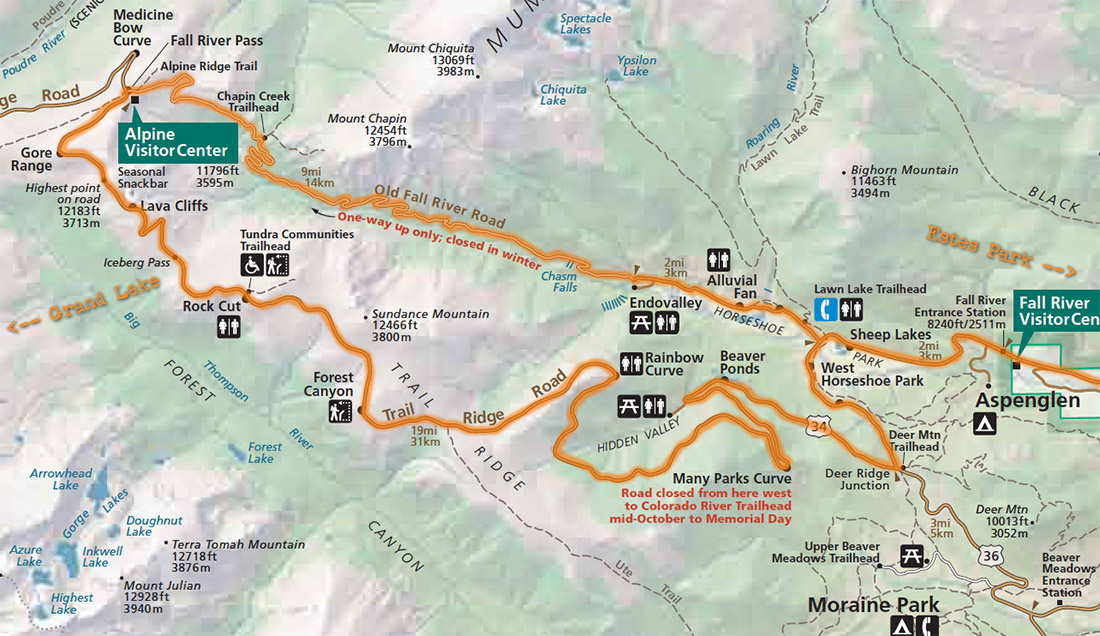
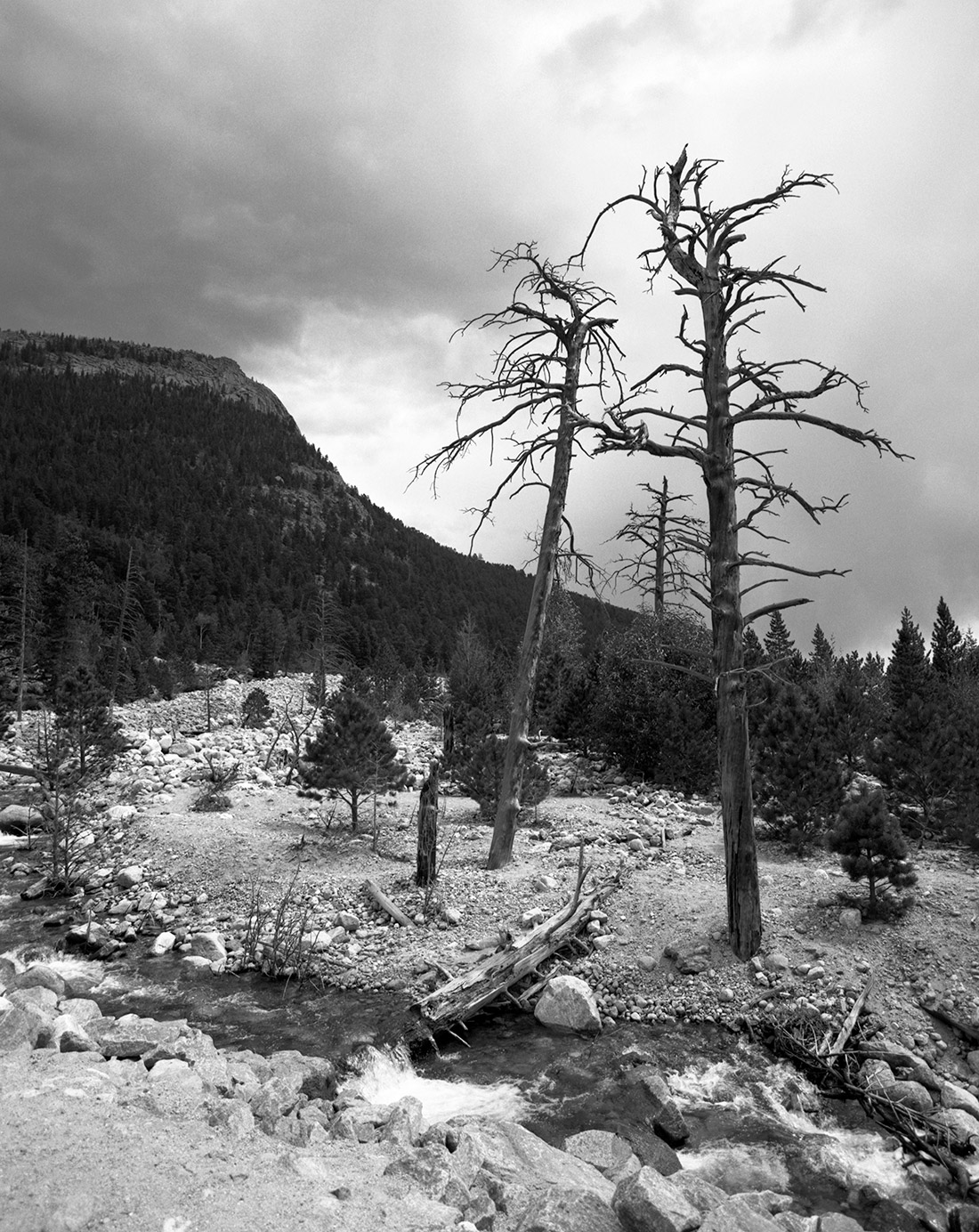
If film is loaded, successful advancing can be confirmed by means of a rotating disc connected to the take-up spool, visible through a tiny window by the shutter speed selector. The disc is striped so its rotation is quite obvious.

The shutter release feels reminiscent of those on larger cameras, and is even threaded for a standard cable release. The front standard of the slide-out viewfinder acts as a lens cover when it’s not extended, and the shutter won’t fire with the cover in place. Closing the finder also disengages the filter if it is engaged.

On the bottom of the camera you’ll find a standard tripod socket and, in its center (meaning the two can’t be used at the same time), a proprietary flash connector. A tiny pin on the end of the camera nearest the single strap lug, when depressed, releases the bottom cover for changing film (see manuals, linked below).

Mamiya-16 resources:

My Mamiya-16 Super was a thrift-store score, coming to me in a shoebox with several other cameras. Ultimately it turned out to be the only one in working order, but that’s okay with me because it’s so cool! It definitely seems to be the most versatile of the three subminis presented here, and feels well made and easy to use.

Unfortunately, as with the others, I don’t have any film cassettes for it, so I won’t be making an effort to test it. I suspect cassettes could be rather expensive — especially since I can’t find any for sale anywhere!

A whole host of other manufacturers got in and out of the subminiature market in the 30 or so years it was viable, and there are a wide variety of unique tiny cameras available around the world for you to try. If you’ve got a cassette I could use to test one of these and you’re interested in trading for some 16mm film, definitely contact me!

A brief history of hotels’ photographic darkrooms

Nuisance of the Kodak Fiend
“Nuisance of the Kodak Fiend,” Los Angeles Herald, Aug. 7, 1899.

Deciding on a hotel to stay in, you’re likely to look for a gym, a business center, a continental breakfast or a pool. But a darkroom for guests?

That’s right, it’s a thing. Or, at least, it was once.

I was introduced to the idea by a passage in “The Devil in the White City: Murder, Magic and Madness at the Fair that Changed America” (Amazon link), and had to look further.

Author Erik Larson writes (pp. 244-245):

… Holmes provided none of the common areas — the libraries, game parlors, and writing rooms — that the big hotels like the Richelieu and Metropole and the nearby New Julien offered as a matter of routine. Nor did he supply the darkroom facilities that hotels closest to Jackson Park had begun installing to serve the growing number of amateur photographers, so-called “Kodak fiends,” who carried the newest portable cameras.

Though I’m familiar with the term “Kodak fiend,” and I know of many a photojournalist who’s worked with film and paper in a hotel bathroom, I’d never imagined a true darkroom as a hotel amenity.

With some research, though, I discovered the trend goes back further than I’d imagined.

As early as the 1850s, traveling photographers had left such a mark that innkeepers would retain stained sheets and towels from their visits to make them available for future photographer-guests.

In his “Encyclopedia of Nineteenth-Century Photography” (Amazon link), John Hannavy writes (p. 383):

[William Henry Fox] Talbot, like many other travelling (sic) photographers who came after him throughout the 1840s, 1850s and 1860s, thought nothing of converting hotel bedrooms into makeshift darkrooms for the preparation and later development of their materials. Indeed, innkeepers in the 1850s were known to keep towels and bed-linen, already stained with silver nitrate, for when photographers came to stay.

Around the time of the American Civil War, wet-plate photography was state-of-the-art. This required a darkroom in situ, however, because the plates had to stay, well, wet. Many photographers created these portable darkrooms in the backs of wagons, using them to travel right to the locations they photographed.

But within just a couple of decades, those trends drove hotels to add fully outfitted darkrooms. According to “The Photographic Experience, 1839–1914: Images and Attitudes” (Amazon link), by Heinz K. and Bridget Ann Henisch (p. 422):

As early as 1888, the Philadelphia Photographer reported that the owner of several establishments on the island of Madeira had set up a darkroom in each; a year later, another journal printed the names of North American hotels that made the same provisions for their guests. The list had lengthened noticeably by the time The American Annual of Photography for 1901 drew up for its readers a nationwide, state-by-state survey of “Hotels Having Dark-Rooms for the Convenience of Tourist Photographers.”

You can read that 1901 list on Google Books. Even earlier, other magazines were starting to compile similar lists, such as this one published by The Photographic Times and American Photographer in 1889.

In May, 1902, under the heading “An International Signboard,” Camera Craft magazine published a note about an worldwide effort to create a symbol, easily posted by hoteliers with darkroom facilities, that photographers would recognize.

Of course, they weren’t perfect. One complaint in particular was that lighting was inconsistent and, in some cases, incorrect. Improperly lensed safelights could fog film and ruin plates. In an 1892 article titled “Letter From Germany,” on page 518 of Anthony’s Photographic Bulletin, Dr. H.W. Vogel writes:

Hotels may consider [proper safelights] as too expensive, and, therefore, prefer daylight. They are also not sufficiently careful in the selection of the red glass. Three years ago I made known that of twenty darkroom lanterns tested by me, not one had red glass actually fit to use. They all admitted the passage of green.

By the mid-20th century, though, it seems this hotel amenity was already disappearing. As 35mm film took over the world of photojournalism, and transmission by wire became the norm, news services like United Press International and The Associated Press began to outfit photographers with portable darkroom kits that fit in a trunk and turned a hotel bathroom into a makeshift darkroom.

In “Picture This! The Inside Story and Classic Photos of UPI Newspictures (2006)” (excerpted here), Gary Haynes describes the portable darkroom effort as part of UPI’s race to beat AP to press with photos:

Converting a hotel room into a photo operation had its amusing moments. An upscale New Orleans Hyatt hotel room was transformed into a lab/darkroom with heavy black plastic gaffer-taped floor-to-ceiling over all the windows and door openings, and extension cords draped everywhere — to safelights, a film dryer, and a transmitter. The maid let herself in the first night to turn down the bed and leave chocolates on the pillows. No doubt wondering if Dr. Frankenstein had moved in, for the duration of the stay she stayed in the hall and pushed UPI’s chocolates under the door.

Today, of course, darkrooms are not only hard to find in hotels — they’re hard to find anywhere. LocalDarkroom.com has a number of listings, but the pickings are slim in the U.S. and around the world. More and more people are building their own as film’s resurgence continues, though.

Sam A. Cooley, photographer
Wagons and camera of Sam A. Cooley, U.S. photographer, Department of the South, in 1860-65; location unknown. (Library of Congress)

Pentax MX: I hardly knew ye

Pentax MX front
The only photo I managed to take of the Pentax MX and 40mm f/2.8 pancake lens. (Daniel J. Schneider)

A quick hit on the Pentax MX, the company’s all-manual pro SLR from 1976 to 1985.

I stumbled on the MX in a thrift shop with a rare Pentax pancake lens on it and couldn’t stop the $20 bill from flying out of my pocket.

The lens was an SMC Pentax-M 40mm f/2.8; not the best-reviewed of Pentax’s lenses, but one of the smallest and lightest they ever made.

I had the MX for nearly a week, during which I pounded through several rolls of film. I traded it for a Lowepro Mini-Trekker camera backpack and a Benro tripod last week.

Vertigo
Vertigo-inducing view between two buildings in downtown Denver. (Daniel J. Schneider)

The numbers

Pentax introduced the MX as one of the smallest and lightest professional-level SLR cameras available in 1976, and continued production until the larger LX hit the market in 1985.

It uses K-mount bayonet lenses, and is reputed to have one of the biggest and brightest viewfinders of its day, as well as a complete line of available accessories including motor drive, data backs, interchangeable focusing screens, and even a 250-frame high-capacity magazine back.

The MX offers no auto-exposure, but boasts a fully-mechanical shutter with speeds form 1 second to 1/1000 second and Bulb. Multiple exposures are possible, too. The two SR44 batteries power the light meter only.

Mime violinist
A mime playing the violin on the 16th Street Mall in Denver. (Daniel J. Schneider)

The film speed selector is on the shutter speed selector knob. Instead of a lift-and-turn arrangement, there’s a small silver button you press to release the outer ring and select the film speed.

The variable self-timer lever on the front rotates away from the lens mount, counting down from anywhere up to about 10 seconds at maximum rotation. Pushing the lever toward the lens actuates the depth-of-field preview. There is a hot shoe on top of the pentaprism housing.

The light meter uses an LED display in the viewfinder similar to the Pentax ME Super, with red, yellow and green LEDs indicating over- and under-exposure. The shutter speed is indicated by means of a clear disc that rotates to show the selected speed next to an arrow on the right-hand edge of the viewfinder. An optical display shows the aperture selected on the lens, too.

16th Street Mall fountain
One of several seemingly random fountains placed in the center strip of Denver’s 16th Street Mall. (Daniel J. Schneider)

The rewind knob and take-up spool release button mirror those on the K1000, and the take-up spool itself works like that of the ME Super. There’s a shutter-ready indicator on the top cover next to the release, too.

The shutter release button has a rotating collar around it that locks the shutter when not in use, and the button is threaded for a standard cable release. Half-pressing the button activates the light meter.

The 40mm lens was the only pancake lens Pentax ever made for film cameras, and the lightest lens they ever made, period.

That’s about all there is to tell for details.

Leading lines
Leading lines on a downtown Denver building. (Daniel J. Schneider)

Using the MX

I loved this thing. I was seriously tempted to keep it, but I’ve had a lot of Spotmatics and K1000s I didn’t need anymore, and I still have my dad’s ME Super, so I need more Pentax 35mm SLRs like I need fog on my film. It just felt fantastic in the hand, though.

The MX is ever-so-slightly larger than the ME Super, but definitely smaller than the K1000 and Spotmatic. Visually, it looks almost identical to the ME Super, though, which is especially evident in the shape of the pentaprism housing.

Functionally, it’s definitely a middle point — a hybrid, almost — between the K1000 and the ME Super. The film advance looks and feels like that of the ME Super, the viewfinder is its equal and then some in terms of brightness and bigness, and the meter display design matches very closely. The mechanical shutter, film and shutter speed selectors, and the size and shape of the shutter release button all remind me of the K1000.

Light plays
Late afternoon light plays across the face of a building in downtown Denver. (Daniel J. Schneider)
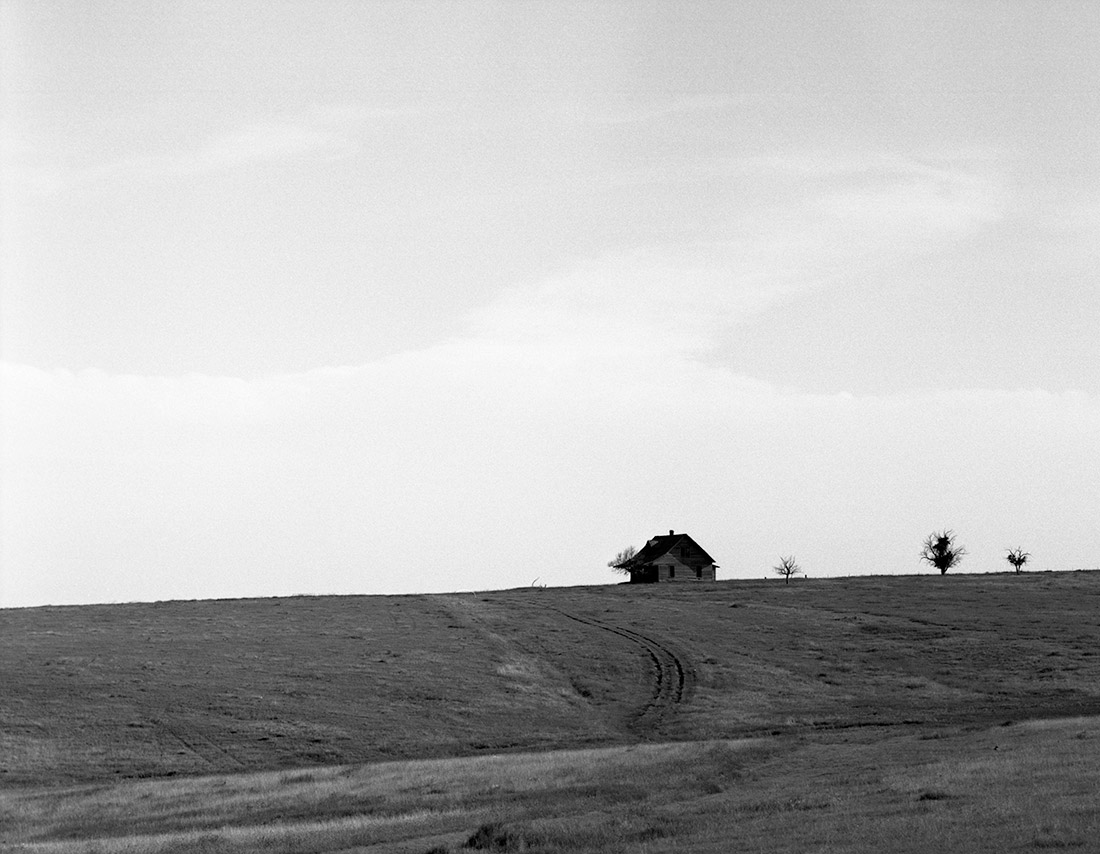
The outlier is the lock collar on the shutter release, which matches none of their other cameras up to that era. It does, however, remind me of the lock on the Pentax 6×7.

I did find the focus ring on the 40mm lens a little hard to locate by feel because it’s only about 2 millimeters wide, which led to accidental aperture changes. I got more used to it, though, and imagine you’d have no problem if you used this body-lens combo regularly.

The shutter speed selector is tight and takes a firm grip to turn, which meant operating it with my index finger as I do with most cameras was difficult or impossible. Based on the condition of the camera, I suspect that could be a result of its having hardly been used during its life.

The Pentax MX and 40mm f/2.8 might be the best SLR street photography kit I’ve tried. It’s diminutive and stealthy, but so obviously an SLR camera as not to draw as many stares as a TLR or many rangefinders. The shutter is exceptionally quiet for an SLR, with the mirror barely slapping at all. I’d guess it’s on par with my Leica IIIc in terms of overall volume.

For Distant Viewing
For Distant Viewing (with Kate at Colorado’s Golden Gate State Park). (Daniel J. Schneider)

The lens is great for “f/8 and be there” shooting; set the aperture to f/8 and the focus distance to 10 feet, and you’ll get sharp or acceptable focus on everything from about 6 feet to near-infinity. The big viewfinder makes composing quickly pretty easy, too.

Of course, the K-mount lens line includes tons of great lenses from both Pentax and third-party manufacturers, and with the range of accessories, this is a great choice for a lightweight walking-around camera with plenty of hidden potential.

This is the fifth Pentax camera I’ve reviewed, and it’s the fifth to earn all five stars. I’m sensing a trend. (I’ve also reviewed five Olympus cameras, but a couple of them have fared less well.)

Afraid I just don’t have anything bad to say about the Pentax MX, though. If you see one, snag it!

Sunset meadow
A golden meadow fringed by turning aspens in Golden Gate State Park. (Daniel J. Schneider)
Colorado National Bank
Colorado National Bank in downtown Denver. A tiny bit of barrel distortion can be seen in this example. (Daniel J. Schneider)
Golden Gate State Park
Golden Gate State Park pine forests dotted with yellow aspens in mid-October. (Daniel J. Schneider)
Tea service
An enameled cast iron Japanese tea service on display in a Denver shoppe. (Daniel J. Schneider)
Denver's light rail moving
Denver’s light rail moves past as a pedestrian waits to cross along the 16th Street Mall. (Daniel J. Schneider)
Chess move
Contemplating a chess move near Skyline Park in Denver. (Daniel J. Schneider)
Denver sign
The Denver sign on c. 1998 Kodak Ektar 125 exposed at EI32. (Daniel J. Schneider)
Discarded sign
A panhandler’s discarded sign in a Denver street as pedestrians cross. (Daniel J. Schneider)

Holiday Craft Fair 2016: More prints for sale

Denver Post Holiday Craft Fair
I’ll be here selling framed and matted prints all day, Wednesday, Dec. 7, 2016!

A quick hit here to announce, late as it comes, that I’ll be selling prints at The Denver Post Holiday Craft Fair all day tomorrow, Dec. 7.

After learning a lot at least year’s craft fair, I’m prepared with several new things this time around.

First: I’ve expanded the selection of prints I’ll have with me, and the space I’ll have to display them.

Second: I’ve added more framed prints, including several with “reclaimed” frames, which I’ve rescued from a variety of sources, carefully fixed up, and thoroughly cleaned. I feel this option gives buyers get a great bargain on a frame while also saving it from a landfill — I hope shippers will agree.

Third: I got a Square account and card reader; last year my inability to easily process a card cost me more sales than I ultimately made. Not this time!

Lastly, along with the card reader, Square affords me the opportunity to sell prints by mail for the first time. You can order one of nine prints in two sizes and more. Check it out at store.schneidan.com!

Alright, Denverites — I know there is snow falling now, and it’s only supposed to be around 20 degrees Wednesday, but it’ll be warm at my table, and the conversation is free!

Details:

Denver Post Holiday Craft Fair
Multiple vendors featuring knitted goods, jewelry, candles, soap, ornaments, prints and more!
101 West Colfax Ave
Denver, CO 80202
In the lobby
9 a.m. to 5 p.m.

Hope to see you there!

Store screenshot
A sample of what’s listed now at store.schneidan.com — check it out today! (screenshot)